
On December 2, 2020, the German government announced its ‘Advanced National AI Strategy,’ signaling its determination to reclaim leadership in AI-related technologies, where it had fallen behind China and the United States. In Germany and across Europe, AI has been singled out as one of the most important technologies of the future, and policy support for it has been generous.
Within Germany, Berlin is the city with the most artificial intelligence startups, emerging as Europe’s hub for new technologies. Here in Berlin is Nota (Nota AI GmbH), an on-device AI startup with the philosophy of ‘making life more convenient and abundant through artificial intelligence.’
Nota holds deep learning model compression technology, a core technology of on-device AI. With this technology it works mainly on AI for mobility, security monitoring, and retail, and in Korea it was the first startup that Naver D2SF invested in.
Later, in August 2020, it succeeded in raising a Series A round joined by Samsung Venture Investment (Samsung SDS Fund), LG CNS, Stonebridge Ventures, and LB Investment, reaching a cumulative investment of about 10 billion won, and it holds the unusual distinction of being the first company in Korea to attract strategic investment from both the Samsung Group and the LG Group at the same time. Following a 17.5-billion-won Series B round in December 2021, it secured an equity investment from Kakao Investment in 2022, and is now on a fast growth track.
Nota, which had been growing at a remarkable pace in Korea, established a branch in California, USA in November 2019, and then set up a new entity in Berlin in April 2020, recruiting Dr. Seulki Yeom as a Senior Researcher.
Until early 2022, Nota operated out of Hubraum in Berlin, a coworking space and startup incubator run by Deutsche Telekom, Germany’s largest telecommunications company. Hubraum opened in 2012 and nurtures startups based on 5G, AI, and IoT; only promising startups can move in after a rigorous screening process.
Since May 2022, it has nested in The Drivery, Europe’s largest mobility hub, strengthening its cooperation with the mobility sector.
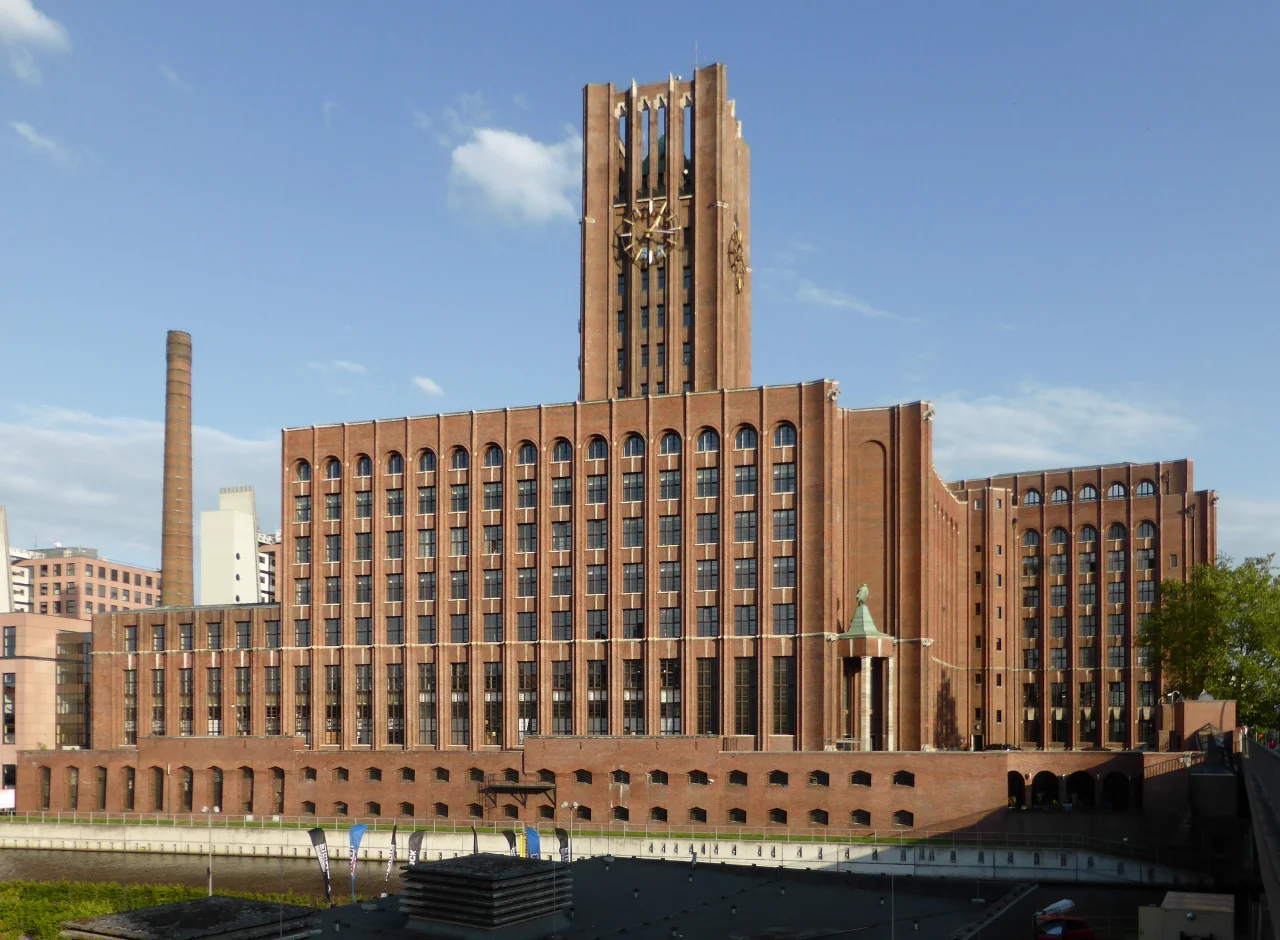
Nota is housed in The Drivery, Europe’s largest mobility hub. ©️ Dirk Ingo Franke, CC BY-S
I met Dr. Seulki Yeom — who worked as a university researcher and has only just stepped into a startup to begin developing technology needed in real life — and heard about research and life in Germany as a Korean scientist.
A Love Call Three Days After Finishing His PhD
Dr. Seulki Yeom completed his doctorate at the Pattern Recognition and Machine Learning Lab in the Department of Brain and Cognitive Engineering at Korea University. The lab’s research goal is to develop advanced image processing (camera video) and signal processing (brain signal) techniques using pattern recognition algorithms, and to develop artificial intelligence technology based on them.
For example, its main fields are Brain-Computer Interface technology, which analyzes brain signals so that external devices can be controlled by thought alone; Cognitive Computer Vision technology, which enables the analysis and prediction of human behavior through camera image analysis; Deep Machine Learning technology, which imitates the human brain; and intelligent Neuro-Rehabilitation technology, which enables patients’ voluntary neural rehabilitation.
Among these, Dr. Yeom received his doctorate in engineering for brain-computer interfaces. And in 2018 he received a love call from Professor Klaus-Robert Müller of TU Berlin, who was then at Korea University as an invited professor under the ‘World Class University (WCU)’ program. And so, just three days after receiving his PhD, he was hired as a postdoc at TU Berlin.
At TU Berlin, the place Dr. Yeom joined was the Machine Learning Group. It ranks among the best in Germany for machine learning research, with excellent research results and an excellent research environment.
Dr. Yeom lectured undergraduate and master’s students on machine learning and took part in large EU projects, combining teaching and research. The lab at TU Berlin mainly dealt with connecting the brain to computer interfaces and with things related to compression and lightweight model technology; at the time, a project measuring human diseases with ECG electrocardiograms was in full swing. Dr. Yeom participated in this project while researching pruning, one of the model compression techniques, as his individual research field.
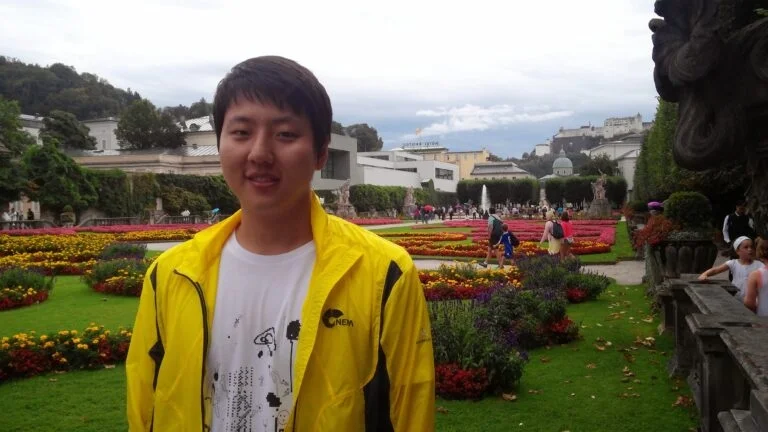
Dr. Seulki Yeom researched pruning technology at TU Berlin, where he was hired three days after receiving his PhD. ©️ Seulki Yeom
Previously he had focused mainly on interpretation methods — looking into and interpreting the decision-making process of deep learning models to find out what is important and what is not — but while searching for a research topic for his postdoc, he became interested in pruning among the compression techniques.
Pruning, as the word suggests, is a technique that keeps what is meaningful and cuts away what is not. Broadly speaking it is a kind of interpretation, but just as he was feeling that deep learning was proceeding in a rather heavy manner, he was greatly attracted to pruning, a technique for finding out which strands of the tangled neural bundle can be cut away.
Dr. Yeom immersed himself in researching methods that keep compression through pruning in mind while continuously maintaining performance.
Meeting Nota, Which Was Looking in the Same Direction
While conducting individual research and team projects at TU Berlin, the joy he gained from research was great, but so was a thirst he could not quite explain. A team project usually involves five or six people. But when it came to the way of working, Dr. Yeom often felt that his basic mindset differed from his team members’.
“When I do something, I focus on that one thing, immerse myself in it, and move toward the goal. But I felt the other members participated in several things at once and couldn’t concentrate on even one. In particular, I couldn’t understand the mindset of leaving for a long vacation even with a paper deadline two weeks away.”
Of course, on a personal level this was perfectly ordinary, but viewed at the team level there was much to regret. That is, it felt as if his colleagues were not running together toward one goal — as if Dr. Yeom alone were running hard. Yet he found it puzzling that in the end, both those who had been negligent about the paper and those who could not participate because they were away on vacation all had their names on the paper together.
In team research, above all, great joy comes from growing together. But during his two and a half years at TU Berlin, the hardest part was that the more he worked hard and focused on research, the greater the sense of deprivation he felt within the team. It was amid such concerns that he met Nota’s CEO, Myungsu Chae.
CEO Chae was at the time pondering where to establish a European entity, traveling back and forth between Berlin and Amsterdam in search of a suitable location. While meeting local scientists and monitoring trends, he discovered Dr. Yeom at TU Berlin and suggested a quick coffee break.
Dr. Yeom had received calls from headhunters from time to time before. But what mattered was being able to do his current research as well as possible, and since he had no interest in changing jobs, he had never once responded to a headhunter’s offer.
But when Nota’s CEO Chae said, “Nota does model compression to make models lightweight,” his eyes snapped open, he says.
Dr. Yeom recalled his encounter with Nota: “It started as simple curiosity — ‘That’s similar to my research?’ — but as we exchanged opinions about the technologies we were each researching, before I knew it I was convinced we were looking at the same place.”
From then on everything proceeded at full speed. Amsterdam had more Korean companies than Berlin, which made establishing a company easier in many respects. It also had the advantage of being a more international city than Berlin, where English is used almost as a common language. Within Germany, Berlin is the city with the most artificial intelligence startups, emerging as Europe’s hub for new technologies.
Moreover, the fact that Berlin could grow on the strength of Germany as a nation, and the fact that Dr. Seulki Yeom was in Berlin, served as the reasons Nota established its entity in Berlin.
The Future Drawn Together with Nota
Nota took part in MWC in Spain, the world’s mobile and ICT fair, in 2019. It was before the entity had been established, and Nota participated to gauge the local European response, but it drew more visitors’ attention than expected. While the vast majority of companies showcased cloud-based technology, Nota alone presented edge devices.
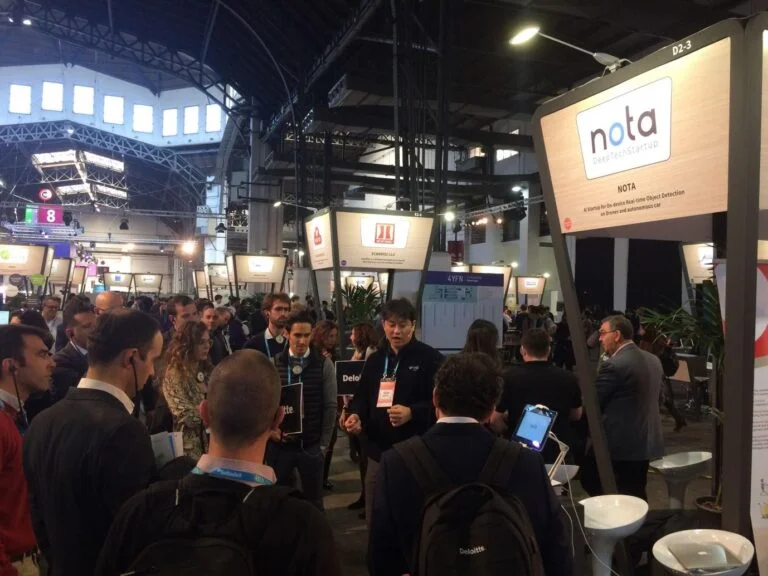
Nota took part in MWC in Spain, the world’s mobile and ICT fair, and validated the potential of its own edge devices. In the center is Nota’s CEO Myungsu Chae. ©️ nota.ai
Nota developed NetsPresso, an automatic AI model compression platform. Dr. Yeom is also in charge of research and development at Nota based on NetsPresso. Compression technology is still unfamiliar in Europe compared to the United States and China.
Even in the Machine Learning Group at TU Berlin, Europe’s top machine learning lab where Dr. Yeom belonged, many people do similar research, but no researcher works on compression in earnest. Even if Europe is slower than Korea in terms of technology development, it has its strengths.
Fundamentally there is an open mind toward all research, and because basic technology is valued, investment and the advancement of technology are achieved quickly. In Korea, even with strong interest in a technology, the process of securing investment is far more difficult than in Europe. That is why, from a company’s standpoint too, Europe is a land of possibility.
For people doing postdocs abroad, returning to Korea to become a professor is the usual path. It is the most stable option, and there are many possibilities of conducting well-funded research through national research funds. But I asked Dr. Yeom, who chose a different path, about the good and hard parts of working at a startup.
“The big advantage is that you can attempt everything without fearing failure. Rather than doing only assigned work within an already fixed frame at a large company, at a startup you can take the lead in research and development that can make the company grow substantially — and that makes the satisfaction high,” he answered.
And: “I haven’t found the hard part yet. If I had to say, it’s that since I’m not doing research because someone tells me to, without self-vigilance you could slack off endlessly. Keeping that in mind, I diligently send progress reports to the Korean headquarters and try to work more dynamically.” In the end, this is because he sees it as his role in the ’team that looks in the same direction and works passionately’ that he had envisioned. The future of Nota and Dr. Seulki Yeom — set to be active in manufacturing, construction, retail, mobility, and many other fields on the basis of computer vision — is one to look forward to.
This article was contributed to [Korean Scientists in Germany] of
Eunseo Yi
eunseo.yi@123factory.de