
The first thing that comes to mind when you think of Ford Motor Company is that it was the first company to devise a mass production method that produced 1,000 cars per day. Currently the world’s fifth largest automobile company, Ford’s position in the automobile industry is a symbol of tradition, to the point where the term “Fordism” was coined.
Although Ford is an American company, it entered Germany, the mecca of the automobile industry, in 1925 and has been with the European market for nearly 100 years. In particular, this was possible because it entered the British market as soon as it was established and was able to absorb some of the technological capabilities of local German automobile companies in Germany as well.
Ford does not consider Europe merely as a market, but establishes the Ford Research Center in Aachen, western Germany, in 1994 to accommodate Europe’s environmental protection philosophy and demand for new technologies and to lead technology development. Ford has a total of five research centers around the world, including its headquarters in Dearborn, USA, and Aachen is leading research in Europe.
Aachen is home to the prestigious German University of Technology Aachen, and its close proximity to Belgium, the Netherlands, Luxembourg, and France makes it an advantageous location for attracting international talent from Europe. Approximately 350 scientists and engineers from more than 28 countries currently work here. By field, we are leading research in the field of future mobility, including the development of next-generation diesel and gasoline engines, fuel cell and hybrid technology, autonomous driving including telematics and new material development, and connectivity IoT.
Here, I met Dr. Noh Seon-hee, a Korean-American scientist who has led various research and development areas at Ford Motor Company for over 20 years.
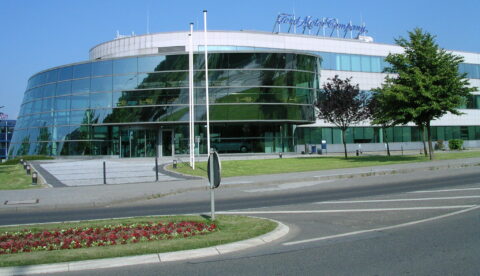
Ford Research Center Aachen, Germany©️Ford Motor Company Ford Motor Company
From internal combustion engine research to Industry 4.0
Dr. Noh Seon-hee completed her master’s degree in mechanical engineering at Sungkyunkwan University and moved to the Technical University of Braunschweig, Germany, where she completed a diploma in mechanical engineering and energy technology. She then earned her doctoral degree by writing a thesis titled ‘Numerical Calculation of NOx Building in Coal Combustion’ at the same university.
Like many German students, Dr. Noh thought that the great appeal of Germany was that there was no need to pay tuition. When I first arrived in Germany in 1986, I initially earned living expenses by participating in various projects conducted in the laboratory, but I thought that I would never be able to complete my doctoral studies this way, so I boldly quit the project for which I received research funding and decided to focus only on my doctoral thesis. Fortunately, I was able to receive a living support scholarship for such students, and was able to complete my doctoral program in four years, a little faster than others.
Compared to focusing only on studying, life was not monotonous. At that time, emissions from the combustion process had to be directly measured, mathematically modeled, and simulated. The dynamic experiment process of visiting a power plant (Kesselhaus) with a high chimney, climbing up the high chimney, and testing and measuring each item directly was repeated. Although it was very hot and potentially dangerous during the experiment, Dr. Noh was very satisfied with the German education that focused on practicality rather than research while sitting at a desk.
After completing my doctorate, I immediately joined Vaillant in Germany, the company that developed the world’s first boiler. At the time, I didn’t give much thought to choosing a career path, and that’s because in Germany, even if you want to become a professor after earning a doctorate, it’s common to have at least six years of practical experience in the industry.
Vaillant is a company with a long history in the field of heating and ventilation technology, founded in 1874. Starting from the initial boiler, the company has recently developed an eco-friendly heating system including new and renewable energy, and has also entered the Korean market.
As it was a traditional German company, Dr. Noh was the first Asian woman in the company. Because he was smaller and younger than most Westerners, he was often treated as an intern who had just started working rather than a manager who had completed his Ph.D. However, because of that first impression, when Dr. Noh showed results, his colleagues responded with even greater surprise.
Vaillant was in charge of a project related to fuel cells. Fuel cells produce electricity by consuming fuel through a boiler, and also produce heat for heating. We conducted research on this method, and as this project progressed internationally, we were able to work in cooperation with companies in various countries, including the United States.
While working at Vaillant for about 8 years, he received an offer to join Ford through this international cooperation project, and began working at Ford in 2000. The border area of Aachen, the international atmosphere where talented people from all over the world gather and communicate in their own English, and the open attitude found in diverse cultures, these all came as positive factors to Dr. Noh Seon-hee.
Even though they use the same English as Asians, they get used to the accents of various countries such as Scotland, Wales, and the Netherlands, and Dr. Noh Seon-hee himself is said to have acquired the knack of ‘speaking as I want and in my own style.’
His research career at Ford began with automobile production model cycle planning, and he experienced a variety of fields, from powertrain integration supervisor to business operating manager covering the entire automobile production process, to Manufacturing Industry 4.0 Specialist handling the cutting edge.
Dr. Noh’s experience, which began with the study of coal combustion during his doctoral studies and now encompasses future mobility such as electric vehicles and self-driving cars 30 years later, is quite like a great saga.
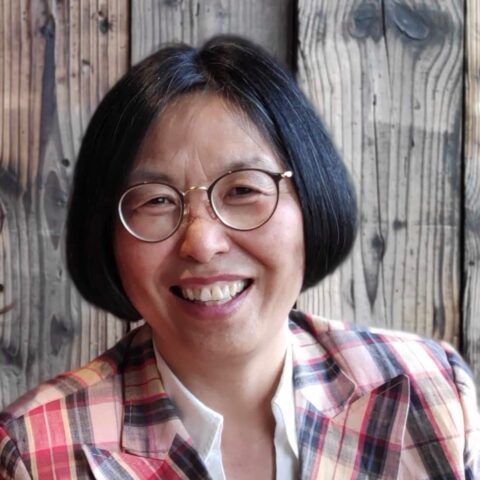
Dr. Seonhi Ro, Ford Research Institute Aachen, Germany ©️Seonhi Ro
The power to know what I want to do and believe in it
It’s quite dramatic to summarize, but this is a long story that spans about 35 years after a scientist set foot on German soil. During this period, Dr. Noh Seon-hee had to constantly learn new things. Just as a computer needs regular updates, this time gave me great pleasure in the process of learning and caring for myself as a valuable tool.
In particular, the experience of exchanging opinions with colleagues in the company’s research lab, reexamining her opinions from various perspectives, looking at issues from a long-term perspective, and working with teamwork gave her a lot of enlightenment in her life.
Although it focuses on research, the efficiency that is inevitable because it is a corporate research center has become a reference point for those leading the project.
When he and his team at Ford Research Institute developed and commercialized a three-cylinder engine, it received ‘The Engine of the Year’ award. And when she received that award for the sixth year in a row, she was in awe of the power of teamwork.
You are working as a member of a team, but when the entire team moves toward one goal, no one knows what the results will be like as a member. It is similar to an artist creating a work, but it is not an individual work but a team work. Here, there are visible collaborators, but there is also excitement that comes from being able to feel a force that one does not know about. This process has always been the driving force in my history with the Ford Lab team members.
Dr. Noh Seon-hee, who is currently in his 60s, advised his juniors, ‘That is why I hope you always listen to other people’s opinions.’ Because a team can accomplish greater things than me alone.
But what is more important than that is ‘discovering what you want to do, finding what you want to do based on that, believing it and continuing to move forward when you find it, and listening to the opinions of others as you move forward, but making your own decisions.’ This is what he wants to convey to his juniors.
While working as a researcher at Vaillant, which developed the first boiler in the 1800s, and Ford, which first began mass producing automobiles in the 1900s, Dr. Noh always worked in an environment called ‘tradition.’ but Now, I think of myself as a tradition, protecting my own identity, taking it as a task and enjoying life.This is Dr. Noh’s dream.
To do that, be more faithful to yourself, The more faithful I am to myself, the more I respect others. Dr. Noh Seon-hee, who has been faithful to her life like this, now has some free time and is now in a position to lead female junior scientists in Germany and is holding small meetings.
At the same time, she is learning various dances, including Latin dance, in order to have a work-life balance with her life partner. This is because I believe that there is great power that comes from dancing and breathing with those who are with me.
- This article was contributed to ‘Korean Scientists in Germany’ of
.
Eunseo Lee