
Innovation Blooming in Closed Mines: The Startup Ecosystem of Nordrhein-Westfalen
Cover photo source=Digital Hub Website
Transforming from a Traditional Industrial Hub into an Information Technology Center… Actively Attracting Foreign Investment through State Development Agencies
Previously, we explored the German startup ecosystems of Berlin and Bavaria, including Munich. Starting with this column, we will introduce the startup ecosystem of the state of Nordrhein-Westfalen (NRW), centered around Cologne, which is the third-largest startup scene in Germany by individual city standards.
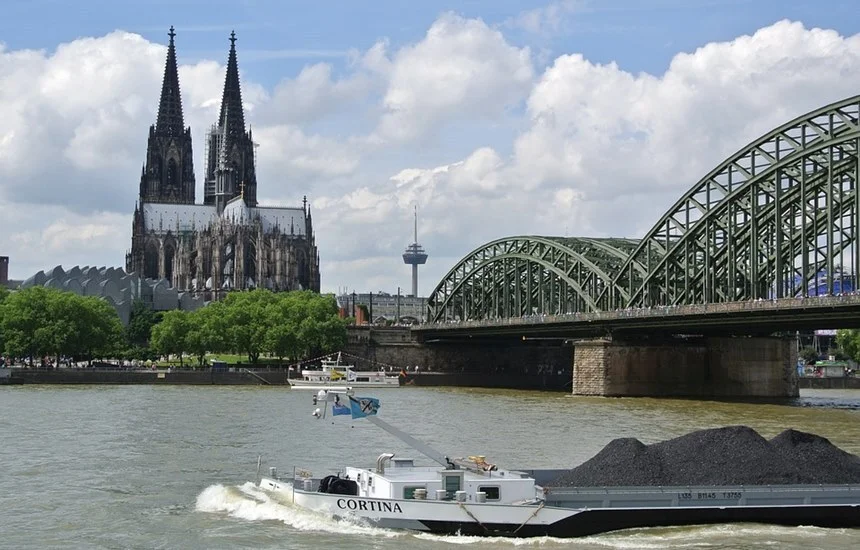
Cologne, the largest city in Nordrhein-Westfalen. Approximately 1,700 startups are based in NRW, showing prominent strength in the information and communication sector. Photo=koelner-dom.de
NRW is located in northwestern Germany and borders the Netherlands and Belgium. Thanks to its geographical advantage, which facilitates expansion into Western Europe, its industries have traditionally flourished. The state capital is Düsseldorf, and the largest city is Cologne. Bonn, where the West German government was located during the division of Germany, is also a highly significant city in NRW. Other cities familiar to many, such as Dortmund, Essen, and Münster, are also located here.
NRW has a population of about 18 million, which is larger than the entire population of the neighboring Netherlands. NRW is the most populous state in Germany and has a high population density. Its GDP is approximately 705.1 billion euros, accounting for about 21% of Germany’s total. NRW’s economic strength surpasses that of Sweden, Poland, and Belgium. At the same time, it is an international region with around 2.7 million foreigners residing there. This means it is not only a place driven by massive industries but also a crucial test market for testing the viability of new business sectors.
Therefore, NRW is highly attractive to companies worldwide. There are about 20,000 foreign companies in NRW, and over 60 Korean companies have established a presence. This is thanks to NRW’s unique international business attraction policies. Independent of the federal government, the state development agency of NRW (NRW.Global Business) operates offices worldwide to actively attract international companies. Due to these efforts, NRW has attracted the largest amount of foreign direct investment (FDI) in Germany.
Balanced Growth Among Startups, SMEs, and Large Enterprises
Traditionally, the Ruhr region was rich in coal and iron. For this reason, it has played a vital role in the German, European, and global economies since the 1950s. NRW also shares deep historical ties with Korea, as many Korean miners dispatched to Germany settled in the region. Having grown historically on the back of the iron and metal industries, NRW is now active as a new hub for IT and healthcare industries.
NRW is home to 710,000 small and medium-sized enterprises (SMEs). These are the robust SMEs known as “Hidden Champions” that form the backbone of the German economy. In addition to SMEs, the share of large corporations is also high, with 20 of Germany’s top 50 companies headquartered in NRW. Well-known global giants such as Bayer, Deutsche Telekom, DHL, Henkel, and Miele are located in NRW.
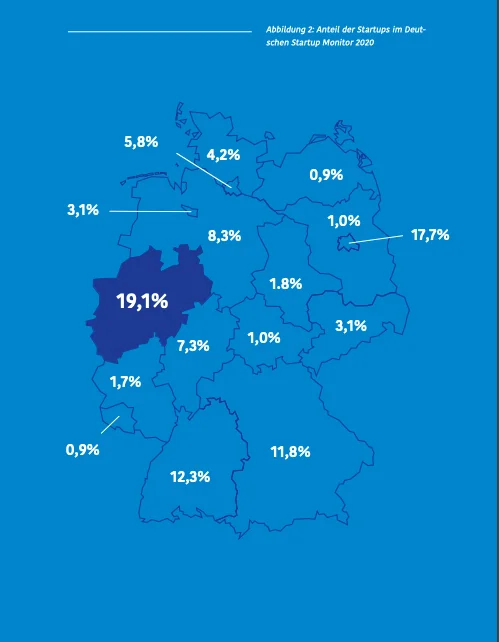
Approximately 19% of German startups are located in NRW. Source=Deutscher Startup Monitor 2020
About 19% of all German startups are located in NRW. A defining characteristic of this region is the abundance of spin-off startups from universities and research institutes. NRW has 68 universities with around 770,000 enrolled students. RWTH Aachen University and the University of Bonn are globally renowned prestigious institutions. Additionally, there are various research organizations such as the German Aerospace Center (DLR), the Fraunhofer Society, and the Max Planck Society.
Particularly in the German industrial sector, where digitalization across the nation and industries is a major topic, NRW’s startups are reshaping the industrial structure by showing excellence in information technology fields. Startups in fields like big data, Industry 4.0, smart cities, IT security, IoT, transport and logistics, energy, robotics, and AI are growing in connection with academic research. Currently, around 1,700 startups are situated in NRW.
NRW’s Robust Startup Support Network
NRW has established a diverse network where startups can receive various forms of support. First, as part of the 12 federal digital hubs, Cologne has been designated as the hub for Insurtech and Dortmund for logistics and transport (DE:HUB), receiving extensive support. At the state level, digital hubs have been opened in six regions—Aachen, Bonn, Düsseldorf/Rhineland, Cologne, Münster, and the Ruhr region—focusing on connecting startups with medium-sized and large enterprises. This is closely integrated with state support organizations like NRW.Global Business and “Gründen NRW”. Building on this foundation, NRW aims to produce the highest number of newly founded startups in Germany over the next five years.
In the private sector, the Founders Foundation plays an active role as an accelerator, facilitating B2B-focused business by connecting startups with the established SMEs that sustain traditional industries.
Additionally, there are unique startup support centers tailored to each region. Düsseldorf and Cologne host “Startplatz” (meaning ‘Starting Point’), while the Aachen region features “Co: Forward”. Paderborn is home to “TecUp”, the startup center of Paderborn University, and Duisburg has “Startport”, a startup support center focused on logistics. These support institutions not only provide direct investments but also offer office spaces and assist in finding investors, partners, and customers.
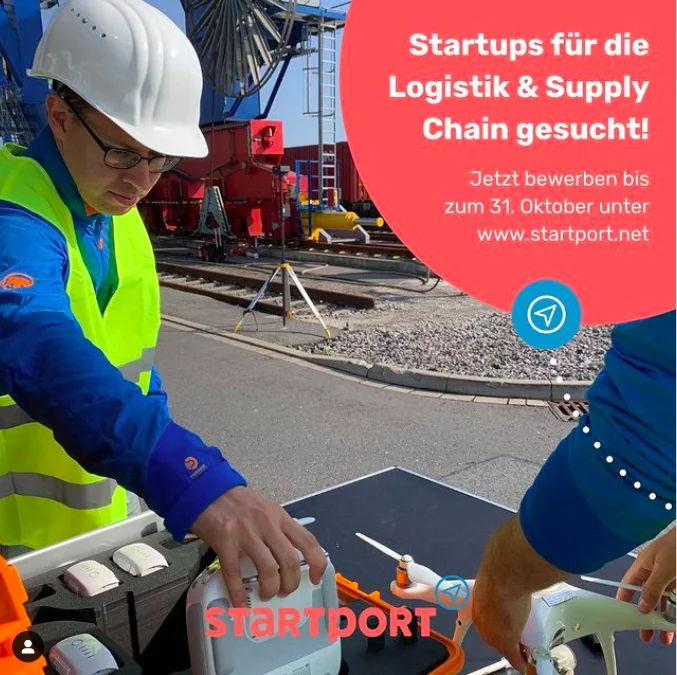
startport, supporting logistics startups. Photo=Startport Instagram
In some cases, established companies run their own accelerators. For example, the Franz Haniel Group operates “Schacht One” (meaning ‘Shaft One’) in Essen’s Zollverein Coal Mine Industrial Complex, a startup accelerator. Zollverein, which transformed a closed coal mine into a massive cultural heritage site, is famous and listed as a UNESCO World Heritage Site. The “paradigm shift” of changing the purpose of a closed mine while preserving the structure itself to create a giant museum offers a valuable lesson in “innovation” to many corporations and startups.
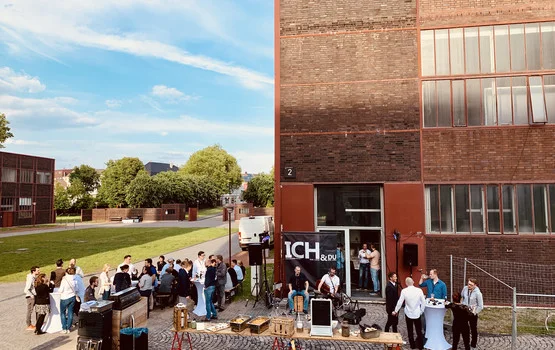
Schacht One, which transformed part of a coal mine into a startup accelerator space. Photo=haniel.de
Furthermore, energy giant E.ON and Innogy (a subsidiary of RWE) have launched the E.ON Agile Accelerator in Düsseldorf and Future Energy Ventures in Essen, respectively, to support and invest in energy-related startups.
Eunseo Yi eunseo.yi@123factory.de
This article was edited and adapted from the “European Startup Chronicles” series in BizHankook.