A Reliable Supporter Helping Korean Startups Enter Germany
Cover photo source=nrw.invest.com
An Interview with Soyeon Kim, Representative of NRW.Global Business Korea
With a population of 18 million and accounting for 20% of Germany’s GDP, the state of Nordrhein-Westfalen (NRW) has the highest economic output in Germany, making it an exciting place for startups. Located here is NRW.Global Business, a German government agency that provides focused support to Korean companies.
NRW.Global Business attracts companies from around the world to NRW and supports NRW-based companies in expanding globally. It has representatives in about 10 countries, including Japan, the US, and China. The Korea office was established in 1988 and has since helped numerous companies enter Germany. We met with Soyeon Kim, who has led the NRW.Global Business Korea office since 2011, connecting Korean and German businesses for over a decade, to discuss NRW’s support policies for startups.
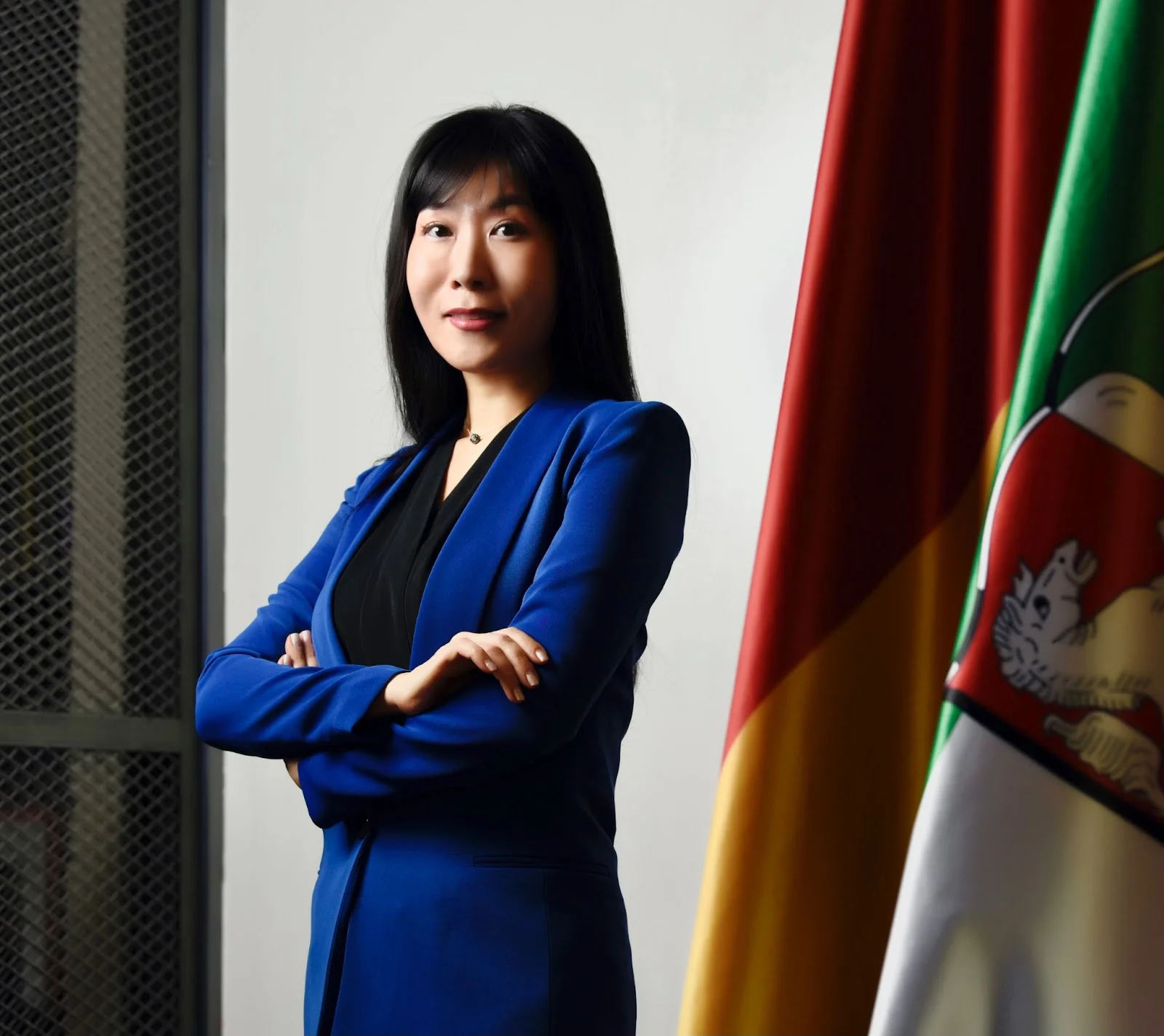
Soyeon Kim, Representative of NRW.Global Business Korea, helping Korean companies enter Germany. Photo=Provided by Chiho Jung
Startup Attraction, Support, and Growth are Core to NRW’s Economic Policy
Each of Germany’s 16 federal states has its own investment and trade promotion agency under its Ministry of Economics. Among them, NRW.Global Business is the only agency that has an official representative office in Korea. This reflects how internationally active the state is and the deep historical ties it shares with Korea.
NRW.Global Business is a state-owned subsidiary 100% funded by the state’s Ministry of Economics. The official name of the ministry is the “Ministry of Economic Affairs, Industry, Climate Action and Energy of the State of North Rhine-Westphalia”. As the name suggests, NRW’s economic policy is shifting from traditional industries centered on steel, coal, chemicals, and machinery toward digital-based novelty and innovation. The fact that the ministry’s homepage is filled with startup news and support policies clearly demonstrates this direction.
Soyeon Kim explained, “It is no exaggeration to say that the NRW Ministry of Economics has staked its future on fostering startups, offering diverse support policies for new companies. Accordingly, the Korea office of NRW.Global Business provides a one-stop service for Korean startups entering NRW. We help them secure not only funding but also networking opportunities with local chambers of commerce and regional enterprises, establishing a solid R&D foundation through connections with various industrial clusters.” In this sense, the Korea office serves as an essential helper for startups taking their first steps abroad.
“Traditionally, this region was so industrially dominant that 40% of all German industrial electricity was consumed in NRW. Consequently, with the arrival of the Fourth Industrial Revolution, it is naturally the region most active in restructuring its industries,” Kim noted. In this wave of transformation, innovation-focused startups are playing a significant role. For traditional companies seeking change and startups leading innovation, NRW acts as a melting pot.
In other words, when traditional manufacturing companies want to innovate but do not know how, startups’ solutions provide an excellent answer. Kim shared, “I remember a collaboration between a German game startup and a traditional manufacturing company. The game startup developed a ‘bonus points game’ as a solution to enhance productivity for the manufacturer, resulting in a win-win partnership.”
Unmatched Scale of Funding, a Place ‘Genuine’ about Startups
NRW is the most populous state in Germany, representing 20% of the country’s total purchasing power—a scale comparable to the entire national purchasing power of the neighboring Netherlands. This stimulates the ambition of B2C startups. It is also a land of opportunity for B2B startups. According to data from the NRW Ministry of Economics, goods and services worth approximately 697 billion euros were produced in NRW in 2020 alone, the largest volume in Germany. With solid large corporations and mid-sized enterprises based here, NRW is a massive customer market for B2B startups.
Major global trade fairs, including Gamescom (one of the world’s top three gaming expos in Cologne), Anuga (the world’s largest food and beverage fair), and Medica (the world’s largest medical trade fair in Düsseldorf), are all held in NRW. It is a region where diverse industries thrive. Soyeon Kim emphasized, “The concentration of many industries itself provides startups with numerous opportunities.”
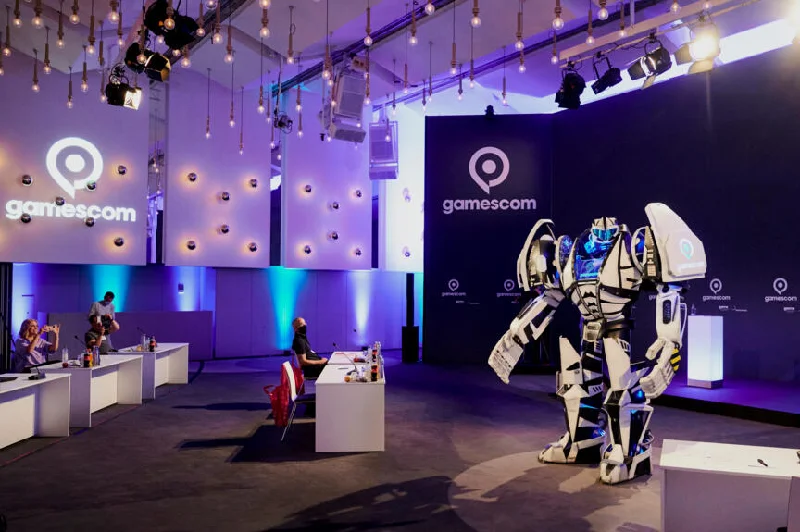
Gamescom, one of the world’s top three gaming expos held in NRW. Photo=gamescom.com
The abundance of educational institutions and research centers is another advantage. NRW has the most universities in Germany and the highest number of university graduates. Globally leading research institutes, such as the Fraunhofer Society and the Max Planck Society, are also concentrated here. Startups have many opportunities to participate in R&D projects in cooperation with these universities and research institutions. Kim said, “Because R&D is strong, government support in commercializing and marketing startups’ research outcomes can bring innovation to the industrial structure. That’s why NRW is truly committed to nurturing startups.”
Looking closely at NRW’s startup nurturing policies reveals the depth of this commitment. The Founder’s Grant (Gründerstipendium.NRW), which provides startup founders with business ideas up to 1,000 euros per person monthly for up to one year, supports early-stage startups founded less than a year or prospective founders, with up to three people per team. During the grant period, it provides not only financial support but also legal and administrative advice and business coaching. Additionally, 75 Starter Centers (Startercenter.NRW) assist in the practical process of starting a business. Having 75 startup support centers in a single federal state is a remarkable scale.
The Excellence Start-up Center program was created to encourage entrepreneurship at universities in NRW. Providing a total of 150 million euros to university-based startup groups with innovative ideas, this program is unmatched in its scale of support. RWTH Aachen University, Ruhr University Bochum, TU Dortmund University, Paderborn University, University of Münster, and University of Cologne were selected as excellent universities, receiving funding in phases over five years to turn innovative ideas into businesses.
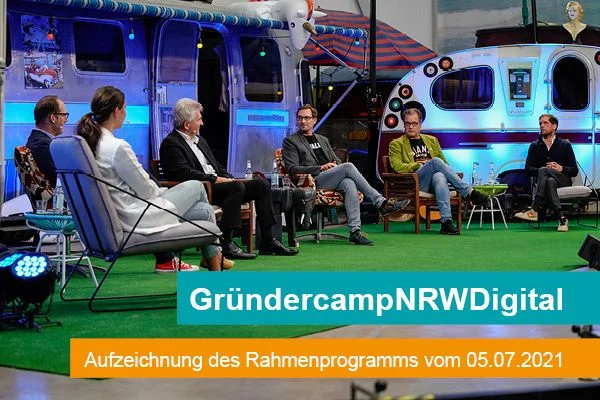
Startup Camp, a networking event held as part of the Founder’s Grant project. Photo=gruenderstipendium.com
Soyeon Kim introduced a recent startup support project by the NRW state government: the 2.2 million euro EnableUS program. This program supports startups from universities and research institutions addressing social and media issues, starting this year with the University of Siegen. The program aims to strengthen the university-based startup ecosystem by expanding startup support into the humanities and social sciences, which previously focused primarily on natural sciences and economics.
“Siegen is a small city not well known to Koreans, but it is home to a university with a strong technology tradition since the 1870s and has produced Hidden Champions, acting as a ’little giant’ in the industry. NRW has many such small but strong cities, like Paderborn and Gütersloh. In other words, it is a place full of opportunities that Korean companies do not yet know about.”
With industrial partners, talent pools, and solid infrastructure, NRW holds great appeal for startups. NRW is employing various strategies to grow and differentiate itself from Berlin, known as the city of startups. Kim confidently stated, “Startups begin with good ideas, but the key is how to grow those ideas into a viable business. Naturally, they must find the right soil where economic projects can yield profits. That is one of the reasons we recommend NRW to Korean startups.”
With a long career in the industrial sector, Soyeon Kim possesses extensive experience and networks in both Korea and Germany. By fully understanding the industries, cultures, and communication styles of both countries, she serves as a strong bridge and supporter for many businesses and stakeholders.
“If a startup is interested in NRW, we support them wholeheartedly. We help them understand economic policies in a broader context, assist with various funding programs, and facilitate networking. Perhaps because we approach both Korean companies and German partners with sincerity, I feel that our sincerity resonates. For example, when helping a Korean company move into the Games Factory in Mülheim, the Games Factory manager reviewed the application forms in detail and provided practical assistance, helping the Korean company secure financial support. When we roll up our sleeves, there is so much we can do.” Kim replied with passion until the end of the interview.
While NRW’s rich startup support policies are attractive, the fact that there is the NRW.Global Business Korea office to guide and advise Korean startups in detail is highly valuable information. We hope this news reaches many Korean startups wishing to enter Europe.
Eunseo Yi eunseo.yi@123factory.de
This article was edited and adapted from the “European Startup Chronicles” series in BizHankook.