
[Interview] I am working in the Berlin tech scene. (1) Shortcut
There are parts of the European company culture we know that are more illusionary than we think, but is there a reason why you still recommend employment at European companies?
Yang Hyo-na (hereinafter referred to as ‘Hyo’): I feel like the company system keeps my life more stable than in Korea. For example, our company has a diversity team, a sustainability team, and a parents support team. I feel like the company is helping me achieve a good work-life balance. Each team has a slack channel, so you can communicate and receive support about difficulties at any time.
Anseri (hereinafter referred to as ‘Se’): The reason why I was able to work in Germany even after having a child at an early age is because of the power of this system. I was grateful that it was an environment where I could take the process of my child’s growth and my career growth without missing anything.
My husband and I took a total of 14 months of parental leave together, exactly half. Before my child started school, there was a time when my husband and I only worked 30 hours at a time. This was possible because I had a system that created an environment where I could work without any discrimination or concern, and a husband who struck a good balance with an open mind. The reason why I recommend employment at European companies is because I think it is an opportunity to realize the idea that ‘the world is wide and my stage is the world!’
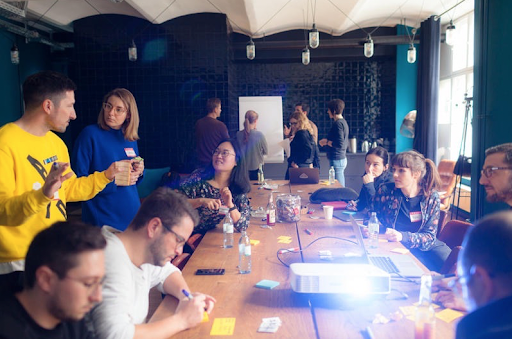
Anseri holding a seminar with colleagues while working as a designer at Daimler Trucks ⓒ Anseri
I think many people are wondering how they can get a job overseas and what the hiring process is like. I think it would be good if you could give us some useful tips on finding a job in Europe.
Hyo: When I moved from Finlip to Emo Scout 24, the most important thing was to find a company with a good work environment while raising a child, so I asked a lot of people around me about the company culture.
If I didn’t know anyone, I contacted them through a friend of a friend at LinkedIn . I am currently working 25 hours a week. Find a company that meets these requirements and ask people who work at this company on LinkedIn. ‘How is the atmosphere at your company?’ I think it is very important to actively find out about the company culture that suits you.
Clementin (hereinafter referred to as ‘Cl’): Designers are usually hired through a 4-5 step process. Starting with the first HR screening and recruiter interview, there is also a document and portfolio case study, a whiteboard design test (in-depth workshop), and a conversation with the team to see if the culture is a good fit. The process has become much more complicated than before.
The tip is that you should always have an updated portfolio as standard. It is better to upload it to a portfolio platform such as Behance or Dribbble, and for case studies, it is important to use Keynote or GoogleSlide to constantly update it with a focus on recent projects. You need to make an effort to confidently show your unique expertise that accumulates with experience and continue to promote yourself.
Se: In document screening, we look at whether the qualifications and hard-skill set the company is looking for match, and in HR screening, we look at basic soft skills and cultural fit with the company. Check here to see if the expected salary is correct. If this isn’t right, it will be a waste of time for both parties in the first place.
These days, tech recruiters are called and specialists in specialized fields participate in the hiring process. In order to hire people in essential technical fields, you need people capable of evaluating technology in that field.
And Active Recruiting is where the hiring manager finds the talent the company needs and makes a scouting offer directly. In the technical field, we usually first check whether the professional skills fit, evaluate the ability to perform these skills, and then filter once in HR.
One of the tips you should know about Europe’s recruitment culture is the recommendation system through networks. I think Europe is a network society. It is different from the Korean concept of personal connections and parachutes. Even if it is an introduction or recommendation from a former co-worker or an acquaintance, it can be influential. That’s why recommendations, references, and networking are important. This can be considered the most important in all recruitment processes. Introductions and evaluations from people who have actually worked with that person have a huge impact.
My first job, and the reason I was able to work at Daimler, was a recommendation from a friend of mine. A friend of mine found out that I was interested in both automotive design and interaction design and had been consistently working in these fields, so he immediately connected me with this opportunity through email.
Hyo: So, it is usually basic to write information about school and work experience on a resume. Most German people always include a letter of recommendation or reference from a previous employer.
Se: So, I give this tip to people who work here to never make enemies when they quit their job. Because, if this person has a history of working at a certain company, we unconditionally check that person’s reputation through people connected to LinkedIn. ‘How was he?’ Through this, the hiring party also conducts preliminary research before the interview. You need to build good relationships with your current co-workers, thinking that they will be your important connections in the future.
All three of us have experience working in various European companies, including startups and large corporations. What are the pros and cons of working at a startup?
Hyo: Startups usually do not have a set process, so being able to easily apply my process is a big advantage. The disadvantage is that since we are just starting out, there are not many users, so it is very difficult to prove our hypothesis.
In other words, testing is necessary to produce a good product, but it is very difficult for startups to find users for the testing. So, since large companies have a lot of insight, there is bound to be a big difference in information power when formulating strategies. In startups, it takes a lot of effort to gain a single insight, and sometimes you have no choice but to go by intuition.
Cl: Zalando initially started out as a startup that sold summer sandals on an online site. The business idea was rapidly developed by verifying through tests whether buyers came online to order sandals and whether there was a need for online shopping or not, and by gathering insights.
In this respect, I think the advantage of a startup is its ability to execute. The team setup is smaller than that of a large company, so product development and improvement can be achieved quickly. Also, I think I learn a lot because I can experience the growth process of a startup step by step. You can see up close the entire process of how a product is developed, how it is known in the market, how it secures users, and how it scales up. On the other hand, the downside is that it is an unstable environment because it can appear and disappear suddenly.
Se: In my case, I joined Nota after considering both the pros and cons of a startup and a large company. First, the fact that it was a Korean startup trying to expand its business into the European market was attractive, and although it was a Korean company, it had a young and free corporate atmosphere that matched global standards, and yet it was dynamic, which is Korea’s strength. There were many times when I missed that dynamic while working at a large German company.
And because the technology of this startup itself is world-class, being able to quickly experience change and growth was a big advantage for me. The potential of this startup gave me a spirit of challenge.
Based on the integration process and experience I have had so far in European society, it was an opportunity to develop a dream of introducing and successfully establishing Nota in the European market and growing it into a leading company in the industry. Although it is a small company compared to large corporations, the biggest advantage of a startup is that it allows you to dream bigger than anyone else.
After listening to the three people, I think that European startups can give Koreans a chance to take on new challenges. Well, there must be a work culture that is different from Korea. Are there any tips for ‘this is how you should work in Europe’?
Cl: It is important to know how to actively express your thoughts. In Europe, especially in Berlin, Germany, you have to work with team members from various countries and cultural backgrounds, so it is important to understand and accept cultural diversity, and smooth communication within it is also essential. And in daily product development, stakeholders with different perspectives have to come together and work together. So, you should not be passive in sharing your thoughts, but you should be proactive when you need to step up and be able to raise objections when you see a problem.
Hyo: I agree that proactiveness is important. When Korean people are usually given a task, they immediately respond positively, saying ‘yes, ok’. But rather than doing that, it’s better to ask more core questions. For example, there has to be ‘something that catches you off guard.’ You should be able to talk about what problems and challenges there are with the proposed business.
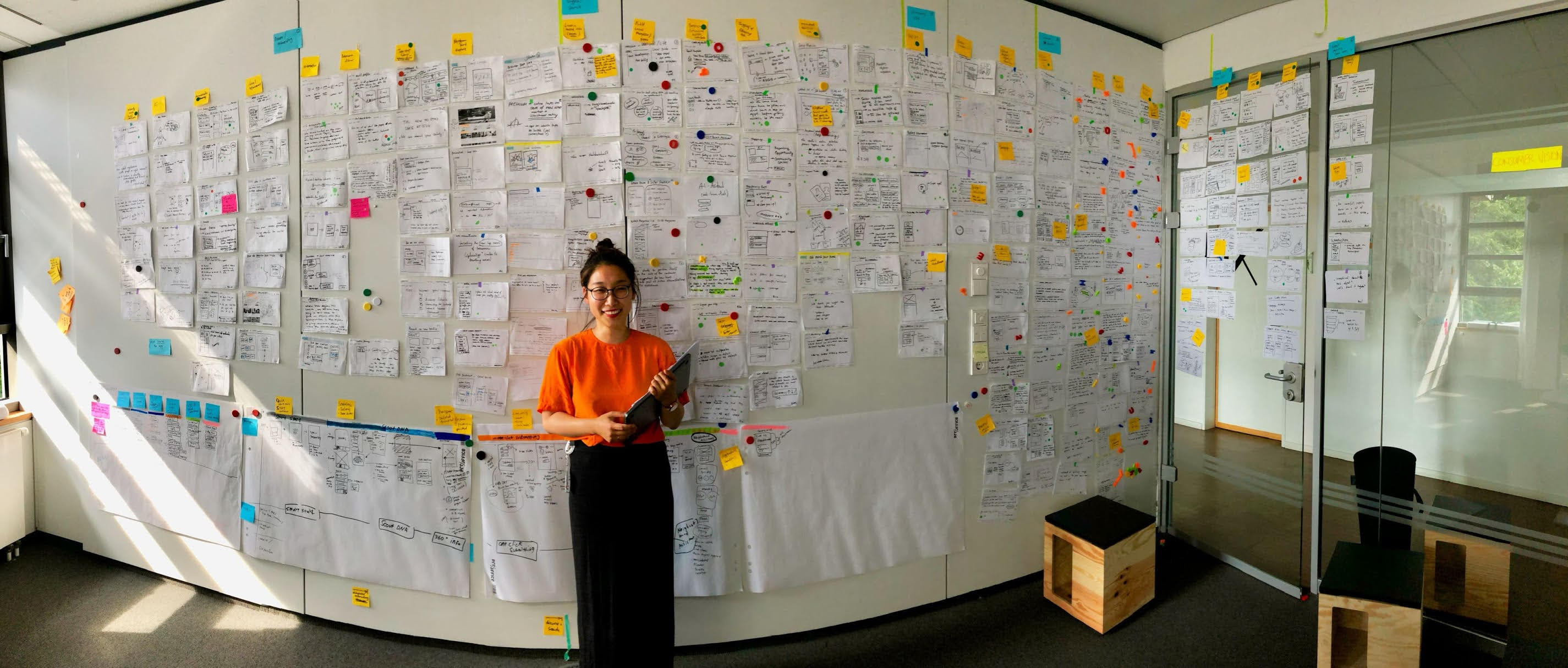
Hyona in front of the idea board where opinions were shared at work. Communication and questions are very important at work. ⓒ Hyona Yang
Cl: Proactivity is important not only when working, but also during the hiring process. During the interview process, you will be evaluated favorably if you ask a lot of questions about the company culture or role and show interest rather than simply saying ’everything is ok, everyone can do it’. The more senior your role, the more you need to be able to confidently sell what you can contribute to the company with your own competitiveness.
Hyo: Being humble is a virtue in Korea, but not here. Being passive is the worst. Most Korean people have excellent design skills and are smart, but they don’t talk about it much because they think they should be shy or humble. In that case, I think it would be a good idea to always create a small conversation that can break the ice and use it to continue the conversation. Then it becomes easier to talk and the atmosphere becomes softer.
Se: I think there are two conclusions. First is language, second is culture. I think people who first come to a foreign country always have difficulties because both of these are difficult.
Cl:. I’ve often seen cases where Korean designers I’ve experienced have very good skills, but they can’t overcome the language and foreign work culture barriers, so they end up only doing the design work they’re given. Just because you got a job in Europe, you don’t have to settle for that role, but you need to constantly make efforts to break barriers. If you don’t have that will, you end up doing what others tell you to do, and an unfortunate situation arises in which opportunities for taking the lead in impactful work are reduced.
Se: When I was in the middle of writing my thesis before graduating from graduate school, a Swedish designer who supported us once said something similar. He had experience working with Koreans and expressed regret that although most Koreans speak English, their skills are not good enough to persuade someone during a presentation. In fact, design ultimately has to lead to pitching that includes storytelling and persuasion.
Cl: Entering a company and taking on an influential role is a career concern that everyone faces at least once. I believe that effectively conveying your thoughts and opinions and persuading people is an essential process for career growth. That’s how you get promoted and your salary goes up. I also think about my next career.
Hyo: But I wasn’t able to do this at first either. After 10 years, I feel a lot more comfortable. So, in the beginning, I would like to tell people coming to Europe to study English really hard. Even if you get a job, there are more barriers than you think. If I can’t speak tiki-taka while working, I come home and think to myself. ‘Oh, I should have told you about this back then!’ I kick the blanket. So, I went to an English academy in Germany at that time. Anyway, if you don’t want to compete with German locals, I would advise you to study English first.
Please give some realistic advice to people who are actually thinking about finding a job or moving to Europe.
Hyo: I think the bad weather is a disadvantage of studying in Northern Europe and living in Berlin. So, I think it would be a good idea for people who are sensitive to the weather to think carefully. Many people experience depression because of the weather.
Cl: I agree. It’s especially difficult in winter. It may seem trivial, but it’s not. Starting in October, the days gradually get shorter, and in December, it starts getting dark at 3 p.m. It’s harder because I don’t see much sunlight than because the weather is bad. If you don’t take care of yourself by taking vitamin D or eating nutritious foods diligently, you will get tired quickly. If you don’t exercise or have other hobbies, winter can be very depressing and lonely.
Hyo: So, if you are a person who gets lonely a lot, I think living abroad will be a bit difficult. No matter how good your work life is, things outside of it can be harder than you think. So, I think people who don’t get lonely easily, who don’t mind being away from their families, who have the skills to get along with people, and who adapt quickly are suitable. So, I would like to tell people who are thinking about getting a job abroad to honestly ask themselves, ‘Why do you want to come abroad seriously?’ This is because there is more to lose than what can be achieved through working abroad.
If I went back to the past, I think I would have worried a lot more. Because the longer I live here, the more I miss my family. If family is very important in your life, I would not recommend coming and living abroad. Instead, I would like to say that if your career and work-life balance are important to you, you should come here and enjoy yourself.
But I don’t think it’s just a vague fantasy. This is because there are so many things that are painfully difficult. For example, racial discrimination is something you would not experience in Korea, but here, it happens implicitly. Work life in Korea is difficult, so you may want to go abroad, but it may be even more difficult than that when you come out.
Se: If you know that, it will be helpful to you as another piece of information. Because I felt frustrated living as a woman in Korean society, I am actually very satisfied with living in Germany. Especially living here as a mother raising a child, I understand why this country is called an advanced country, and I have respect for it. The system for socially disadvantaged people is really good.
So, I think is a good fit for people who are curious and aren’t afraid of taking on challenges. I believe that you can settle down without difficulty if you are prepared to meet new people and accept a completely different culture.
Cl: There is no perfect society. Each person will have different priorities in life and different values, so it may be wise to consider these things and take on challenges. Or sometimes, instead of thinking too deeply, just follow your heart, trust your instincts and intuition, and say “Go for it!” I would like to advise you to throw it away. I think no matter what choice you make, there are no good or bad choices, only experience and learning.
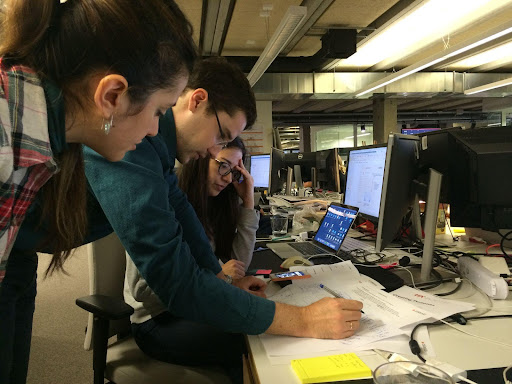
Clementin Jinhee in the middle of a discussion with her colleagues at Zalando ⓒ Clementin Jinhee
I am curious about the future plans and dreams of those who work in Europe and live proudly as women.
Hyo: The reason I first went to Finlip was because I wanted to learn about startups, and there was also a reason why I wanted to create a startup myself. But so far, I haven’t found a specific area or goal to say, ‘What should I do with my project?’ Since I have connections with Korea and Germany and have experience with products, my dream is to connect my strengths and experiences to create my own service or product in 10 years.
Cl: I want to do more product-related work using my unique expertise in UX, product design, and research. I have always wanted to become independent and work as a freelancer rather than working for a company. So, starting next year, I plan to prepare slowly. Even after the age of 50, it sometimes feels a bit frustrating to be in a corporate structure. You will know if freelance work is right for you or not when you try it. I wonder if I should try it now or when.
Se: My primary goal is to lead Nota into a global company, and in the long term, my dream is to grow into a great global female leader.
During the four-hour interview, I was able to obtain a lot of information about employment and work life in Europe from the three people. In particular, it was a very basic and core content that cultural differences and language barriers between Korea and Germany are a more important part of work life than expected.
In other words, the important thing is not to succeed in getting a job, but rather to think about ‘what kind of picture this job will have in my entire career life’ and plan your career with a longer perspective. When you set your final destination as ‘successful employment abroad’, you do not want your life to be shaken by unexpected difficulties that you may encounter after successful employment.
The narrow-minded thinking that creates the illusion of ‘overseas employment’ based solely on other people’s stories, that Korea is ‘Hell Joseon’, and that Europe is ‘Paradise’ is ultimately not true. There is nothing of any benefit to me. No matter what environment you are in, if you are self-centered and proactive in solving your own problems, your career will unfold beautifully, whether it is in Korea or Europe.
InterviewIntroduction
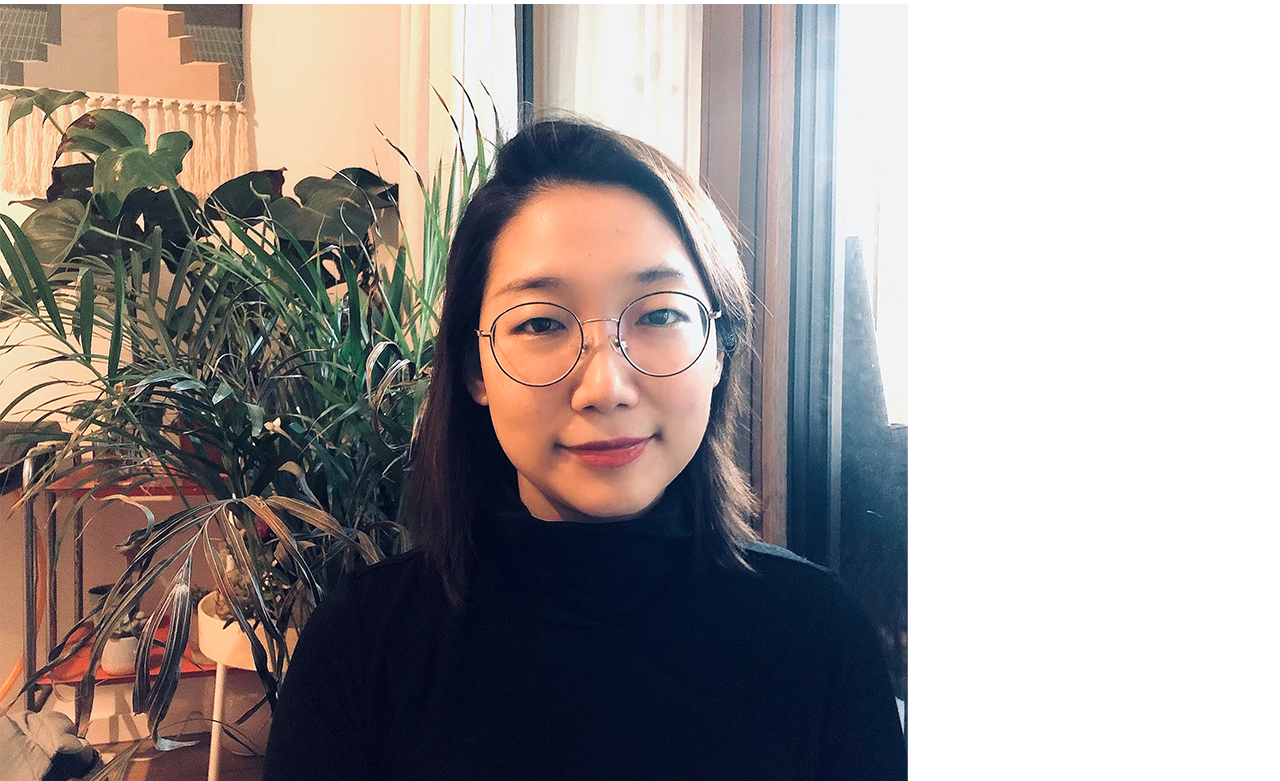
Yang Hyo-na
He graduated from Hongik University’s Department of Game Design in Korea, did an internship at Naver’s global design department, worked as a marketing designer at IBM, and then moved to Copenhagen, Denmark, where he graduated from the Interaction Design course at the Copenhagen Institute of Interaction Design (CIID).
After working as a UX designer in Berlin, he worked at design agency Icon Mobile Group (iconmobile group) and fintech company builder Finleap, and is currently working as the lead UX designer at ImmoScout24, Germany’s largest real estate platform.
*LinkedIn (https://www.linkedin.com/in/hyeona/)
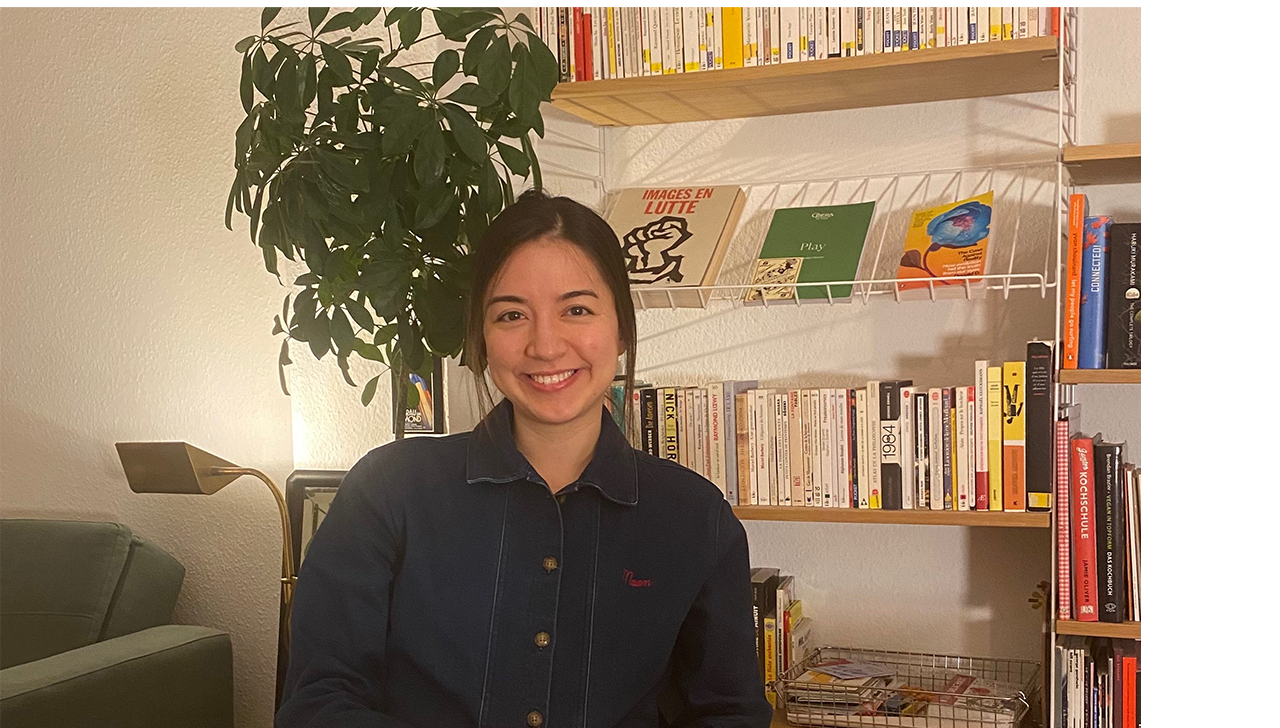
Clémontin Jinhee
He grew up as a French-Korean mixed race, spent his childhood in Korea, graduated from Sorbonne Nouvelle University in Paris, France, and began his career as a UX researcher at LG Electronics France in Paris.
Afterwards, I first set foot in Berlin while working as a UX designer at the iconmobile group in Berlin. Currently, I am working as a Principal Product Designer at Zalando, Europe’s largest fashion e-commerce company.
*LinkedIn (https://www.linkedin.com/in/clementinejinhee/)
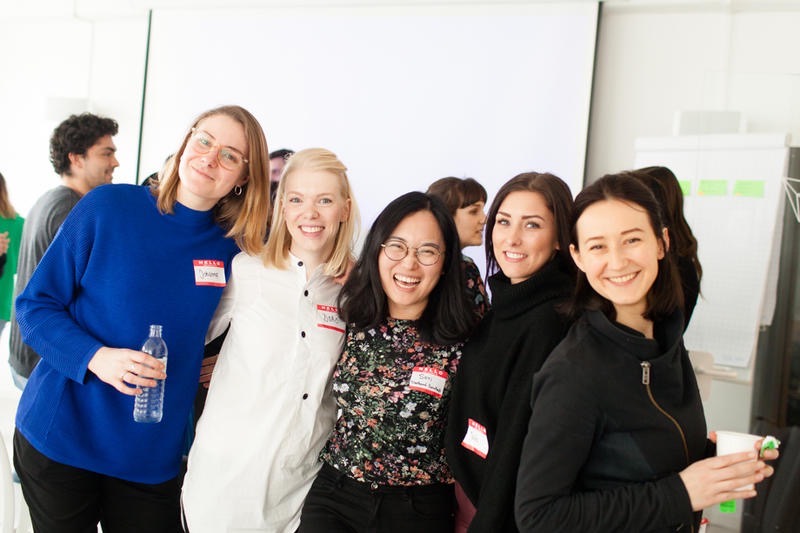
Anseri
After graduating from Keimyung University’s Department of Industrial Design, he completed his master’s degree in Transportation Design at Umeå Institute of Design (UID), Sweden, which is famous for producing many world-class design talents.
Afterwards, I came to Berlin to work on automotive UX/UI design at icon incar under the iconmobile group, and later worked on various automobile-related projects, including an automobile OEM strategy consulting project, at McKinsey Digital Lab in Berlin. After working as a lead UX designer at Daimler Fleet Board Innovation and Daimler Trucks for over five years, he worked in the innovation department within a large German company, and has recently started a new career as a general manager at Nota AI, a Korean-based Berlin startup.
*LinkedIn (https://www.linkedin.com/in/seri-saekyoung-an/)
- This article was contributed to Wanted’s [All About Overseas Employment ‘Europe].
Lee Eun-seo