When looking into the Berlin startup scene, something interesting stands out. The point is that any well-known startup always has Koreans. In Germany, in small and large companies, there are relatively more opportunities for people who have studied in a German-speaking country, have professional skills in the field, or speak German perfectly. However, the language barrier in German itself is quite high, and the business culture of the German cultural sphere is quite different from that of Korea, so there are barriers for ordinary Koreans to get jobs at ordinary German companies.
However, the threshold for startups is relatively low. As explained in the previous article, Berlin is a very global city, and most startups in Berlin are targeting Europe and the world stage beyond Germany, so English is often the official language. Additionally, in order to create products for global users, hiring people with diverse backgrounds is a necessary part of achieving good results as a startup. Especially in the case of developers, the door to employment is relatively wide because skill is the most important criterion for hiring.
If you follow a startup you are interested in through LinkedIn, the largest SNS in the global business world, you can also check out the employees working there at a glance. And you can network with them if you want. You can get information by contacting people in similar fields, and if you are lucky, you may even get the opportunity to have a simple Zoom meeting.
What’s especially interesting about LinkedIn is that you can gauge the speed and direction of growth in real time through job postings from startups that are growing. In other words, if you look at how many people a startup is hiring and what field of people they are hiring, you can understand their investment status and business direction to some extent. You can also see how Koreans are active in the European startup industry.
This time, we met and interviewed three Korean women who are active in the German startup scene.
InterviewIntroduction
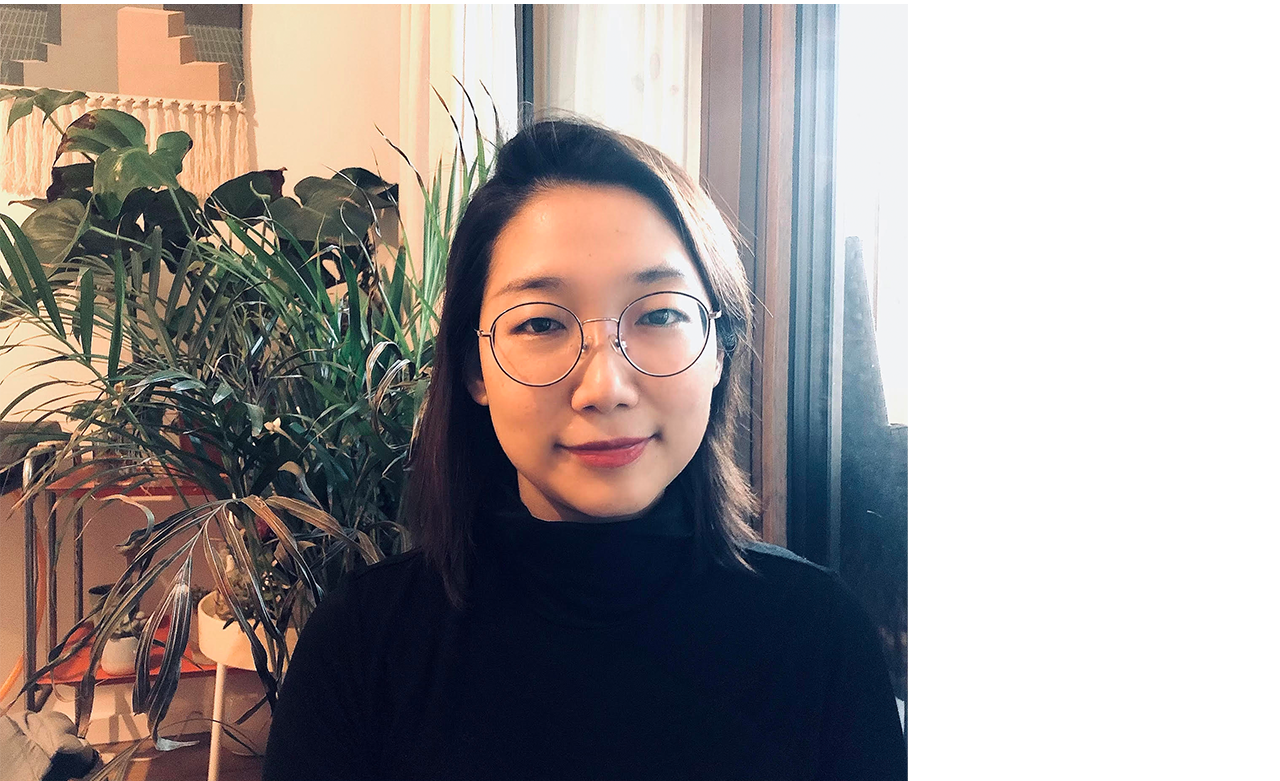
Yang Hyo-na
He graduated from Hongik University’s Department of Game Design in Korea, did an internship at Naver’s global design department, worked as a marketing designer at IBM, and then moved to Copenhagen, Denmark, where he graduated from the Interaction Design course at the Copenhagen Institute of Interaction Design (CIID).
After working as a UX designer in Berlin, he worked at design agency Icon Mobile Group (iconmobile group) and fintech company builder Finleap, and is currently working as the lead UX designer at ImmoScout24, Germany’s largest real estate platform.
*LinkedIn (https://www.linkedin.com/in/hyeona/)
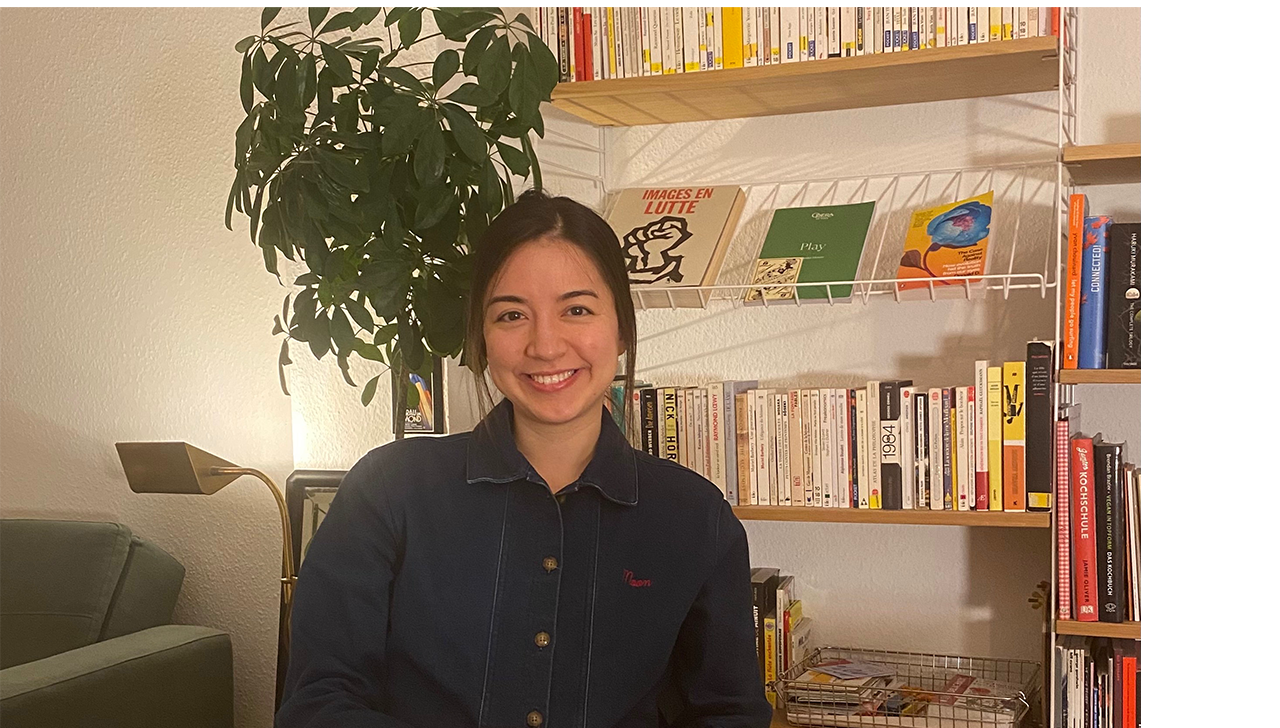
Clémontin Jinhee
He grew up as a French-Korean mixed race, spent his childhood in Korea, graduated from Sorbonne Nouvelle University in Paris, France, and began his career as a UX researcher at LG Electronics France in Paris.
Afterwards, I first set foot in Berlin while working as a UX designer at the iconmobile group in Berlin. Currently, I am working as a Principal Product Designer at Zalando, Europe’s largest fashion e-commerce company.
*LinkedIn (https://www.linkedin.com/in/clementinejinhee/)
Anseri
After graduating from Keimyung University’s Department of Industrial Design, he completed his master’s degree in Transportation Design at Umeå Institute of Design (UID), Sweden, which is famous for producing many world-class design talents.
Afterwards, I came to Berlin to work on automotive UX/UI design at icon incar under the iconmobile group, and later worked on various automobile-related projects, including an automobile OEM strategy consulting project, at McKinsey Digital Lab in Berlin. After working as a lead UX designer at Daimler Fleet Board Innovation and Daimler Trucks for over five years, he worked in the innovation department within a large German company, and has recently started a new career as a general manager at Nota AI, a Korean-based Berlin startup.
*LinkedIn (https://www.linkedin.com/in/seri-saekyoung-an/)
I am so glad to meet someone from Korea who works at one of Berlin’s leading companies. I’m curious about why you came to work in Berlin and your career so far.
Yang Hyo-na (hereinafter referred to as ‘Hyo’): After finishing my studies in Korea, I joined Naver as an intern. At that time, I was thinking of studying abroad, so all my active seniors advised me to ‘go study abroad.’ In Korea, designers tend to be under a lot of stress, so that’s good from a long-term perspective.
Later, in 2008, when there was no concept of UX/UI, I worked for a short time at IBM Korea. At that time, I learned about ubiquitousness, interaction, and service design through IBM, and naturally became interested in it. I was looking into studying abroad in a related field, but found that the US was too expensive, so I turned to Europe.
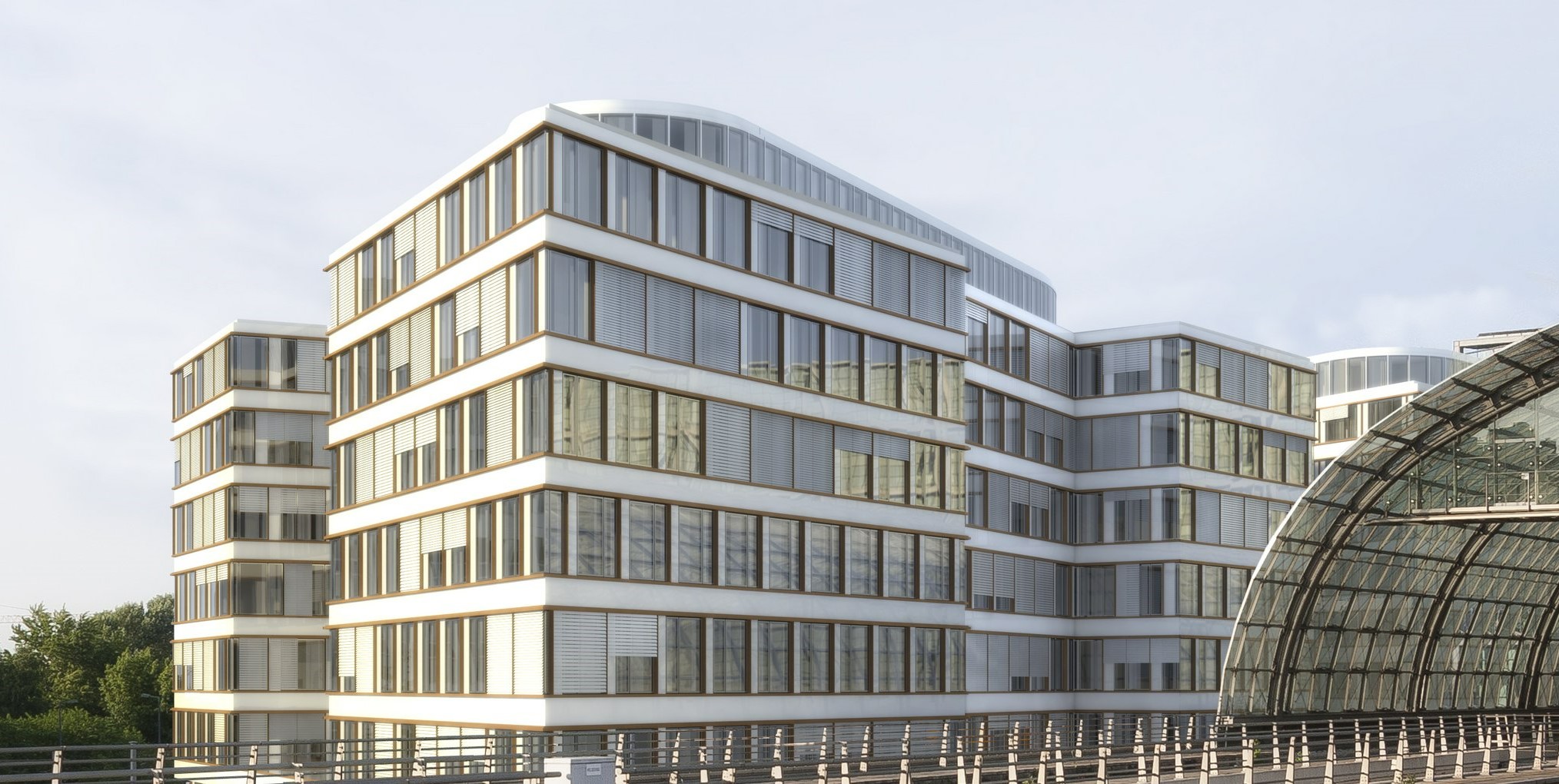
ImmoScout24, Germany’s largest real estate platform, where Yang Hyo-na works as a lead UX designer.
When you apply to a known design school in Europe, the next step is an online interview, but I wanted to visit the school in person and see what it was like. But I didn’t have money at the time, so I contacted the school’s admissions office directly and asked for help, and I was able to stay where the students lived. It was a valuable opportunity to obtain accommodation and information about the school.
I ultimately chose the Copenhagen school. Because it was in the middle of the city, it had a dynamic atmosphere for Northern Europe, and I liked the fact that there were many collaborations with famous companies in Denmark, such as LEGO.
Another advantage was that there were many people of different races and with different experiences. I worked as a team with friends with various experiences, such as engineers, film directors, and researchers, and the school created an environment where creative results could come out.
After I graduated from school, my Danish friends recommended Berlin to me. At that time, Berlin was a poor but sexy city, a city loved and admired by young Europeans, and I came to Berlin with such a pure heart. When I came, I experienced a lot of culture shock. After living in clean Copenhagen, I saw Berlin, which was relatively dirty with a lot of punks.
Anseri (hereinafter referred to as ‘Se’): After completing my bachelor’s degree, I looked into graduate schools to study automobile design more deeply. I also had a vague idea that I wanted to develop a global mindset in a more spacious and flexible place. As I was looking for a school where I could study automobiles, without the burden of tuition, and that provided good quality education, I narrowed down my options to Germany or Sweden.

Anseri during her time as lead UX designer at Daimler Trucks ⓒ Anseri
Ultimately, I ended up getting my master’s degree at a university in Umeå, a small city in northern Sweden. Umeå is a city with a really small population, but its universities have students from so many different countries that a world map could be drawn. They are friends who, like me, gathered in this small place because of school. As a result, my friends always stick together and the solidarity between seniors and juniors is very good. No matter where you go around the world, you will have seniors and juniors from school, and no matter what company you work for, being from Umeå has the advantage of being able to feel the power of that network.
I studied automotive design here, but as I went to school, I realized that it wasn’t for me. However, even if it was not about car design itself, my interest in the design process and approach, and the various things that can be done with design, grew even more. So, I took a lot of classes in the interaction design department, and when I graduated, I presented my graduation thesis on a topic that connected automobile design and interaction design.
When I graduated from graduate school and was thinking about my career path, I met a friend from school who was already working and I told him about my concerns, and he recommended me, saying that his company was doing work that was right at the intersection of those two points. Thankfully, I received an interview request the very next day, so I made an appointment and left the first interview right away shaking the interviewer’s hand. This is how I started my first job in Berlin.
Jinhee Clemontin (hereinafter referred to as ‘Cl’): My father is French and my mother is Korean, so I grew up between two cultures since I was young. I was born in Seoul and spent my childhood in Korea, so I think I have a good understanding of Korean culture. While going to a French school in Seoul, I grew up eating French food with appetizers, main courses, and desserts at lunchtime, and eating kimchi and warm rice made by my grandmother at home in the evenings. When someone asks me if I’m Korean or French, I answer 100% and 50%.
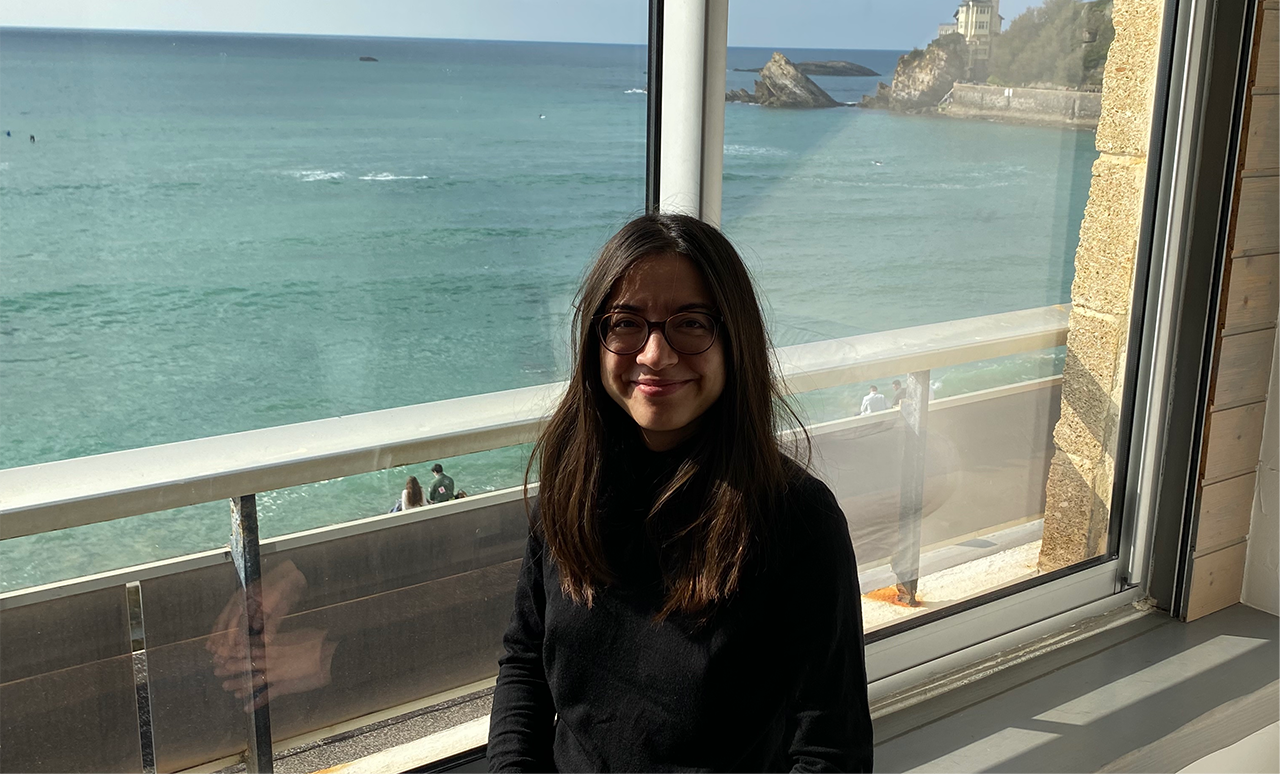
Clementin Jinhee, who works at Zalando, a Berlin fashion e-commerce company ⓒ Clementin Jinhee
I went to college in Paris, and after graduating, I worked in European R&D at LG Electronics’ mobile division in Paris for about four years. Since I was interested in computers and IT, I naturally wanted a job related to R&D, and I think being fluent in Korean and French gave me an advantage in joining the company. In 2007, before smartphones became widely available, I first started working as a coordinator working on mobile phone software verification in the feature phone era.
Afterwards, I conducted mobile phone user experience testing through UX research and gained experience in UX research and mobile interaction design from the field. At the time, the term UX was very unfamiliar and there were not as many related jobs as there are now. I was thinking about changing jobs to further my career in this field, but a friend of mine told me that a Berlin design agency was looking for someone with an international profile who was not German but had experience in mobile projects, so I applied and it worked out well, and that was the beginning of my first time living in Berlin. I didn’t know how to speak any German, so I never thought I would be able to come to Germany and work.
What company are you currently working in?
Cl: I am currently working at ZAlando, a fashion e-commerce company. Zalando is a startup that started as an online shoe seller in 2008 and has now grown into a fashion platform where you can shop over 2,000 fashion brands in over 18 European markets. Recently, we signed a strategic partnership with Louis Vuitton Moët Hennessy’s cosmetics platform Sephora, allowing you to shop high-end beauty products. It is an organization that continues to scale up.
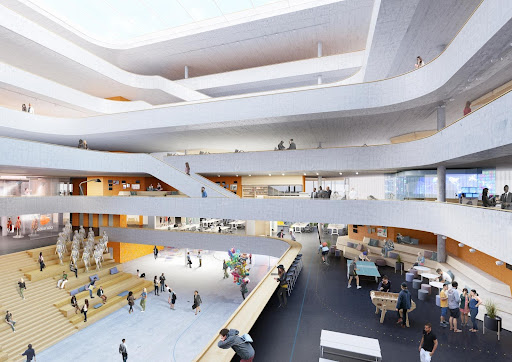
Inside the Berlin fashion e-commerce company Zalando headquarters © zalando
I joined the Zalando mobile product development team in 2016 and was responsible for the UX design of Zalando’s main mobile app. While working at LG and Icon Mobile, ‘mobile’ continued to be an important keyword in my career. If you compare the UX of Zalando’s app in 2015 and the current app, there are a lot of improvements. It was one of my personally proud career experiences as it was an achievement I achieved together with my team members, which consisted of product managers, engineers, and designers during the project. Based on the new design, we are having fun working while steadily leading to more UX improvements and business growth.
Se: I’m Currently I’m working as a general manager at , a startup in Berlin. Nota is an AI startup headquartered in Korea and with branches in Europe. Nota launched the beta version of its representative platform ‘NetsPresso’ based on AI optimization source technology, and based on this, it has a number of optimized AI solutions such as intelligent transportation systems, facial recognition-based access authentication, and low-power driver monitoring in vehicles. Last year, we entered the European market by establishing a corporation in Berlin.
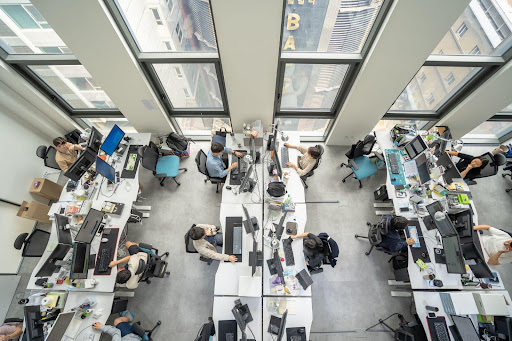
Nota, an AI startup in Berlin ©Nota
Until now, I have worked as a UX designer, digital product designer, user researcher, and strategic designer, but through Nota, I am taking on a new challenge by taking on the role of managing the European corporation instead of being a designer for the first time.
Hyo: I am working as a lead UX designer at ImmoScout24, a German online real estate platform. I am currently supporting a team of about 13 designers. So, not only do I work as a designer, but I also do a lot of management work.
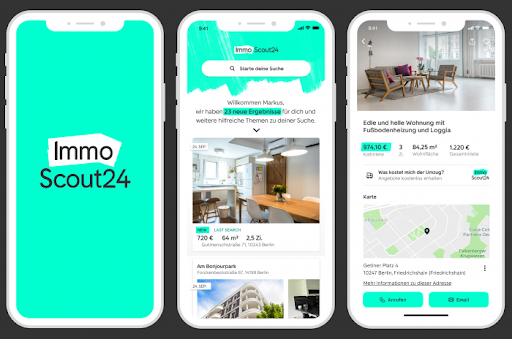
App of Immo Scout 24, Germany’s largest online real estate platform ©Immo Scout 24
It seems that working as a designer and managing work are very different. What are the differences in your work? Everyone is now leading a team or company, and I think they are basically doing more than what a designer does.
Se: First of all, One of Nota’s leadership principles is ‘Customer Centric.’ I believe that we can only develop if we recognize that the standards that the company considers important lie in our customers and think customer-centric. I was able to start because the mindset and values I had as a UX designer fit well with Nota’s operating policy.
It is often said that the role of design is ‘problem solving.’ For example, if you think of a company team member as a user, solving problems arising from the environment, work process, etc. that he or she faces can also be seen as design, so I think it is not much different from the work I did before. Also, the design manager was a great fit for me. My role was to create an environment where I could contribute to the growth of others and empower them to maximize their abilities. I think the area has expanded a bit.
Another thing I have done a lot so far is ‘connecting dots’ . Its role is to connect departments to departments and connect other tasks. If collaboration and communication are not carried out well, there is a mismatch in direction, which ultimately results in customer discomfort.
Therefore, we must always put the customer at the center and design well so that they do not feel inconvenienced, but this is not an easy process in organizations with low design maturity. This is because the decision maker is not the designer.
I imagined what it would be like if the decision maker in the business was a designer. If you look at business success cases, they were cases where companies with high design maturity created and provided user-centric products and services. While I have played that role as a design lead, at Nota, I would like to take on the challenge of successfully operating the European subsidiary with a focus on customers and co-workers.
Cl: I think the job of a designer is to design experiences. Ultimately, people are the ones who use the product, and the designer’s job is to make people have a good experience through the product. Even if a product is created by a technology-based company, it is ultimately people who use it. I think the designer’s mission is to define and solve problems and deliver good UX.
To do so, it is very important for detailed professionals such as product designers, user researchers, branding designers, UX writers, product managers, and engineers, who are a combination of UX/UI, to come together and collaborate closely. One of the roles of a principal designer is to actively lead such collaboration to take place well. It is also my daily work.
And as a principal, I was often assigned to lead people on projects that established the company’s long-term direction for the next 2-3 years. It is a strategic vision project that is pursued by considering not only UX but also the direction of business evolution. The principal designer may be a somewhat unfamiliar position, but it is a role that can be considered the next level up from the senior designer and can have a significant impact on the overall (holistic) experience and vision of the product.
Hyo: I’m currently doing more team management work than the design itself.I think it would be easy to explain that my job is to create an environment for designers to do their work comfortably and well. So my main job is to pitch current problems to executives.
In the beginning, the most important thing I did as a designer was to show and visualize the strategic vision of the project. The task was to identify the direction the product would take in two years, identify problems through a design thinking process, and create a prototype for a solution to show the vision.
This is what I learned the most from my first job at fintech company builder ‘Finleap.’ Finlip is a company builder that helps startups create companies and receive investment, and as a result, I had valuable experience participating as a designer in the projects of many startups that went through Finlip.
During my Finlip days, I used everything I learned at design school. Research designers, business developers, operations managers, legal experts, etc. join the product team and are given a task. The idea is to look for businesses that are likely to succeed in a specific field.
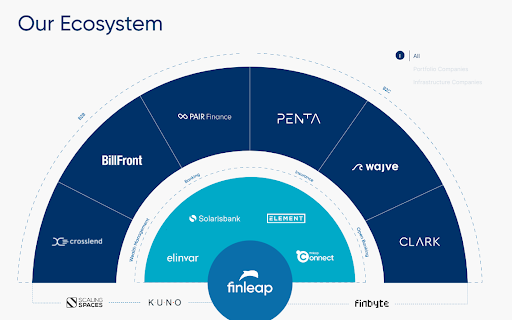
German fintech startups co-created by Finleap © finleap
The projects I worked on at that time were the early work for startups ‘Clark’ and ‘Element’, which are now insurance unicorns. I didn’t know anything about insurance, but while taking on that project, I looked for problems with current insurance and created a business plan based on those problems.
My experience living in Berlin as a foreigner at the time was very helpful, and I saw the lack of foreigner-friendly insurance in Germany as a business opportunity. So, I was in charge of a project to design a kind of startup using this. I did user research, pitched to investors based on that, and experienced a variety of processes.
Afterwards, I worked on rebranding at Emo Scout 24 and did a lot of work to structure the process of creating the product. Although my job title is designer, I think it would be easier to think of it as actually working to devise strategies to ensure that products come out and sell well.
All three people have different histories. Although they are all currently in Berlin, some of them came here after working for foreign companies in Korea, some came from France to work at large Korean companies, and some started working for their first company in Berlin. How do Korean and European companies differ in terms of working environment?
Cl: The good thing about startups and companies in the European tech scene is that they eliminate as much as possible from the hiring process any discriminatory factors such as race, education, age or gender. This is to secure appropriate talent that fits the organization’s culture and position without bias during the hiring screening process.
The second is that we consistently make efforts to provide fair compensation for work performance. In the case of Zalando, there is a performance compensation system that evaluates the results of work performed. Once a year, I receive feedback from team members who have worked closely with me, and the summarized content goes to the board of directors to evaluate and decide as objectively as possible whether I need a salary increase or a promotion. There is no need to worry too much about salary negotiation, and it is not decided by my boss’ subjective thoughts. I understand that more tech companies are moving towards this fair system for talent management.
Hyo: There were a lot of difficult times in Korea. I worked at a design agency for a short time, and I had the experience of being suddenly assigned to an unplanned project, and even having a presentation made overnight without a design process, only to have the project stopped when the managing director came and looked at it and said, “No.”
Seniors working in the design field did not feel like they were working with a vision compared to how long they had been working at the company. I also remember a lot of people talking about how difficult it was at work and whether we should open a chicken restaurant if we quit. Compared to that, IBM had many differences at the time, perhaps because it was a foreign company. First of all, there was a culture of leaving work early, and the communication structure was very equal. There was a lot to learn in terms of work, and even though I had no experience and was young, I had the opportunity to experience a variety of tasks.
Also, compared to Korean companies, the managers’ work is very different. In Korea, it is usually the boss or manager who gives instructions from above, but in Germany, the manager usually plays the role of supporting and supporting team members. For example, a manager holds a 1:1 meeting with all team members once every 1-2 weeks, where the team leader usually asks team members what problems they have and if there is anything he can help them with. It’s the manager’s job to take that as homework and help the team members. That’s why managers who solve team members’ problems are considered good managers.
However, thanks to Finlip, I had the opportunity to break the illusion that ‘not all European companies have work-life balance.’ During the four years I worked at Finlip, I created 7 to 8 ventures. I worked like crazy. We had to deliver the project results within a month, and the MVP had to come out within another 3 months. If the results were not good, we had to close the project right away, go through a pivot process, and come up with a new product. I had fun working, but I worked really hard.
However, after starting a family and having children, I felt the need to switch to a company that was more stable and would allow me to maintain a family life. After doing some research, I ended up moving to my current company with a better work-life balance.
As you said, I think that ‘work-life balance will be perfectly guaranteed in European companies’ may be an illusion that many Koreans have. Would you fantasize about another European company in that context?
Hyo: Even in Germany, there is a problem of women’s career interruption. People vaguely think, ‘Europe will be more equal,’ but many German women experience career breaks due to raising children or giving birth. However, there are more solid social systems and laws than in Korea. There is a social security system that allows you to rest with subsidies from the government for 12 months after giving birth. In addition, you do not have to work 40 hours a week, but you can work only 20-30 hours depending on your situation. There are also legal regulations that prohibit firing employees who return after giving birth.
However, people who work less are inevitably inferior to people who work a lot in terms of experience and power. It is natural that if your influence in a company decreases, your career will be delayed. When a child is sick, you have to take time off from work, and then there are some things that are naturally excluded. Structurally, it is true that there is an atmosphere in which children can rest when they are sick and no one says anything about it, but if you do not completely immerse yourself in work, your voice will eventually become quiet.
Se: It’s really much better than Korea, but still, working moms face difficulties wherever they go. There are difficulties here in the early days after having a child. So, I was wondering how I could kill two birds with one stone (childcare and work) as a ‘working mom,’ but as time went by, it turned out to be three birds with one stone (childcare, work, and career). Work and career are completely different. There may be no career break for working mothers in Europe. Because it provides social security. But there are bound to be breaks in your career.
European countries with good welfare, which we commonly know, seem to be concerned about equal career growth opportunities beyond the concerns of working mothers’ career interruption. Although the problem of career interruption has been resolved to some extent due to the robust social system, prejudice against women’s social position still exists, and the quota system is being introduced as a device to resolve this.
Hyo: Our company’s new CTO is an Indian woman, and that was one of the most sensational news recently. Although it has a global atmosphere, it is still rare for a foreigner or woman to become a leader. In other words, the reality in Europe is that there are still bound to be gaps based on race and gender.
Cl: But the difference is that we are clearly aware that it is a problem. For example, at Zalando, we believe that it is problematic that 80% of our executives are men, and we consciously make efforts to select more female leaders.
Se: Sometimes not all co-workers are open-minded. Although Berlin is a global city, German companies sometimes face difficulties due to language. These days, many companies realize that diversity and multicultural team members lead to significantly better creativity and performance. But there are still many places lacking.
(Continued from part 2)
- This article was contributed to Wanted’s [All About Overseas Employment ‘Europe].
Lee Eun-seo