Cover photo source=KIC-Europe official Facebook page
What Happens When Berlin Meets Korea?
enpact, Berlin’s public agency for startup support, has begun paying attention to Korean startups — and from 2022, getting things done in Berlin becomes easier.
What happens when the words “Berlin” and “Korea” come together? Berlin is, without question, Europe’s startup hub: a dynamic ecosystem where 500 startups are born and 80,000 startup jobs are created every year. In 2020, venture capital invested in Berlin startups reached 3.1 billion euros (about 4.2 trillion won). The Berlin Senate Department for Economics has put startup policy front and center and is accelerating its support. Berlin’s economy, which once had a weak traditional industrial base, now looks as if startups are leading the way from the front.
As a result, established large corporations and global companies have started to gather in Berlin one by one. Novartis, the world’s largest pharmaceutical company, established its German subsidiary in Berlin. In an interview with the Berlin Senate Department for Economics, Dr. Thomas Lang, head of Novartis’s German subsidiary, said, “In the healthcare industry, the key decision-makers — parliament, institutions, service providers — are in Berlin, and above all, Berlin is a digital frontrunner and a city with many startups worth noting, even from a pharmaceutical company’s perspective.”
Berlin is also an important place for the media and creative industries. Universal Music’s German subsidiary, the world’s largest label, occupies one of the most prominent buildings along Berlin’s Spree River. Axel Springer, Germany’s largest media group, relocated its headquarters from Hamburg to Berlin in 2017, dubbing Berlin “a new intellectual hub."
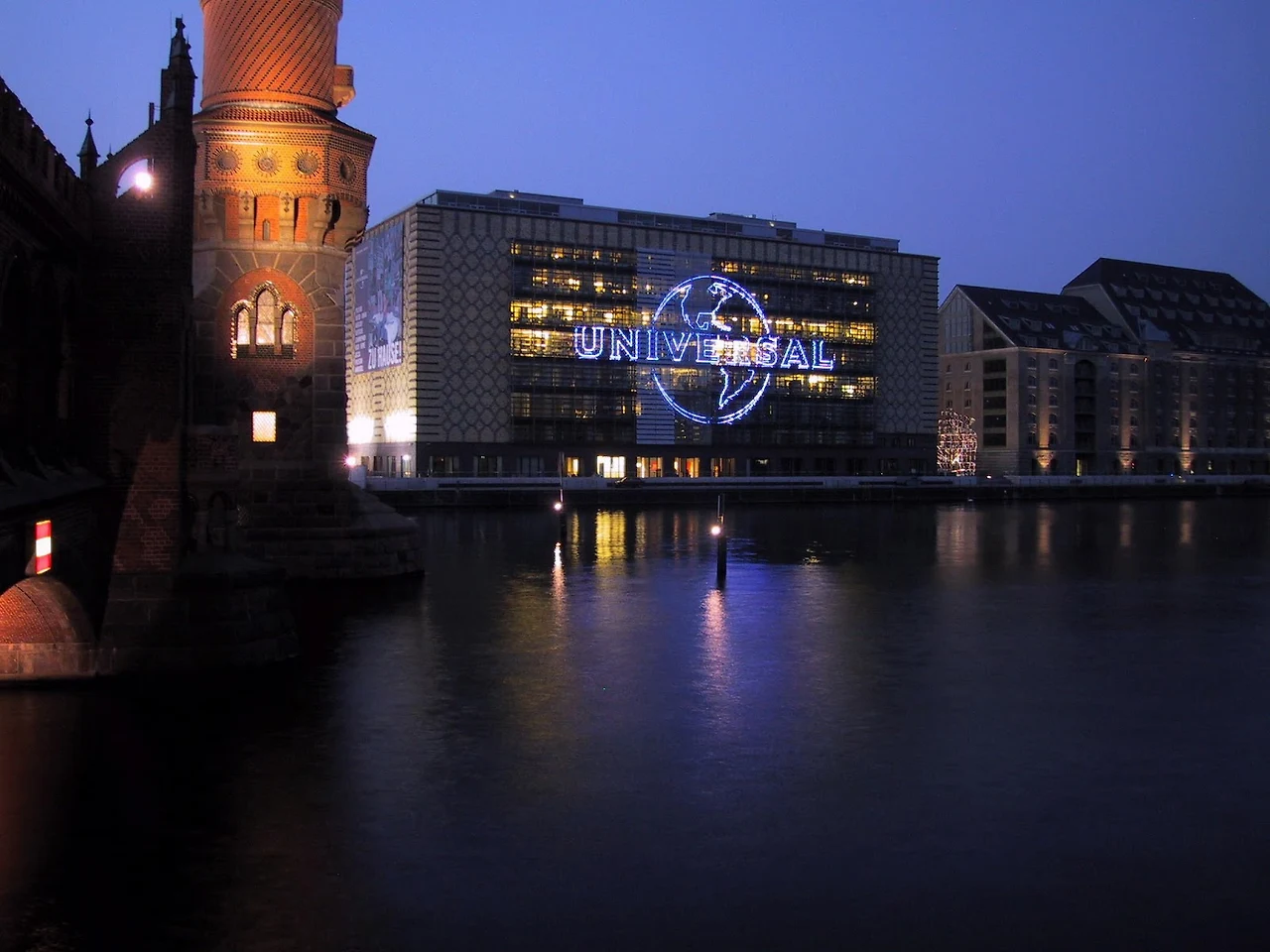
The Universal Music building on the bank of Berlin’s Spree River. Photo=universal music germany facebook
The Brand Value of “Korea” in Europe
What does it mean to carry the brand “Korea” in Europe? Hearing the music of BTS and BLACKPINK on the radio has become an everyday occurrence. At most well-known clothing brands, you can readily find collaboration T-shirts printed in Hangul. In big cities, Korean restaurants are springing up like a boom, and even in ordinary supermarkets, items like gim (seaweed), ramyeon, and gochujang are sold with their Korean pronunciations spelled out. Korean breadcrumbs are especially popular. Even though Germany has its own German-style breadcrumbs, Korean breadcrumbs get better treatment. “There’s no other product that reproduces crispy fried food this well,” testifies a German friend who is a fan of Korean breadcrumbs. Sayings like “phones means Samsung” and “appliances means LG” feel only natural, and it’s actually hard to find someone who hasn’t watched a single Korean drama on Netflix. Among people who consider themselves savvy about technology and culture, Korea has become the “hottest” country.
This is also proven by the data. In the Global Soft Power Index 2021 surveyed by Brand Finance, “Korea” rose 14 places from the previous year to 11th. It received particularly high marks for its response to COVID-19 and its Future Growth Potential.
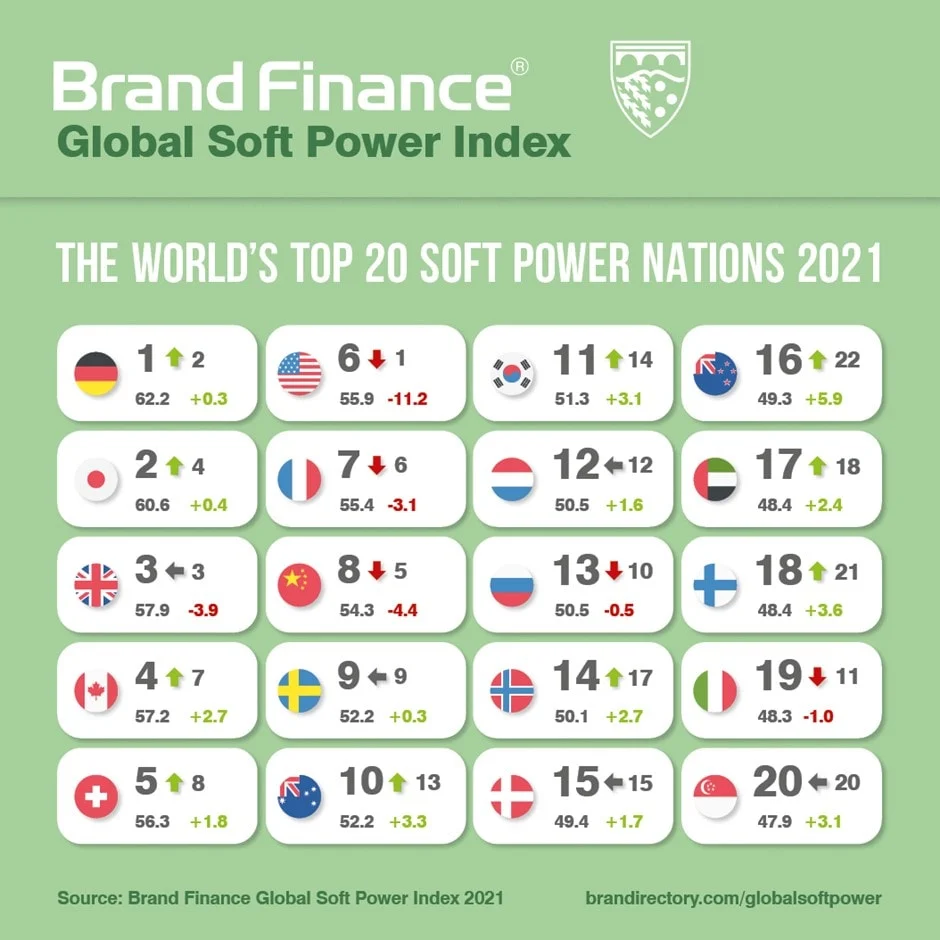
Brand Finance Global Soft Power Index 2021. Korea rose 14 places from last year to 11th. Photo=brandfinance.com
In particular, the heightened public perception in the fields of education and science and in international relations became the basis for the high ranking. The Soft Power Index refers to a nation’s ability to influence the preferences and behaviors of the various actors on the international stage — countries, companies, communities, and the public. In other words, Korea has become a far more “appealing country” than before.
Therefore, when equipping themselves with the brand “Korea,” startups should make the most of the positive aspects of the national image. As a digital and technology powerhouse and a leader in culture, Korean companies can start out on the European stage with a plus factor over companies from other countries.
KIC Europe, Connecting European and Korean Startups
In Berlin, there is KIC Europe, which plays the role of linking the Korean and European startup ecosystems. KIC Europe (Korea Innovation Center Europe) supports the global commercialization of science- and ICT-based Korean startups through networking, mentoring, incubating, and investment attraction. Founded in Brussels in 2013, it relocated in 2016 to Berlin, the hub of European startups, to focus on entrepreneurship and technology commercialization. Together with KIC Silicon Valley, KIC Washington, and KIC China, KIC Europe is an organization under the Ministry of Science and ICT and is connected to IT support centers and science and technology cooperation centers around the world. It can be described as a place that ponders how to make Korean startups “appealing” in the European market.
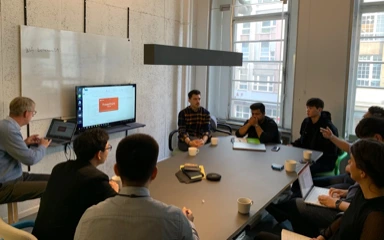
KIC Europe’s K-Innovation Hub-Lab. Photo=kiceurope.eu
KIC Europe operates a mentoring network for startups. The mentoring is run by 25 experts across various fields within the EU — in Germany, the UK, France, Belgium, Austria, Spain, the Netherlands, and more. It also expands access to information by country and language region across Europe through a regional expert network, systematically grasping regional demand. Currently, a regional expert network of about 15 people is in place. KIC Europe plays an important role as a partner that works through the practical difficulties of early-stage entrants together, by providing office space, support for establishing a corporate entity, and local commercialization support.
On the 25th, an interesting event was held in Berlin. enpact, Berlin’s public startup support agency, and KIC Europe signed an MOU so that Korean startups could receive various forms of support and take root. The signing of the MOU is a symbolic event and at the same time means that, in practice, Korean startups now have one more dialogue partner when entering Europe.
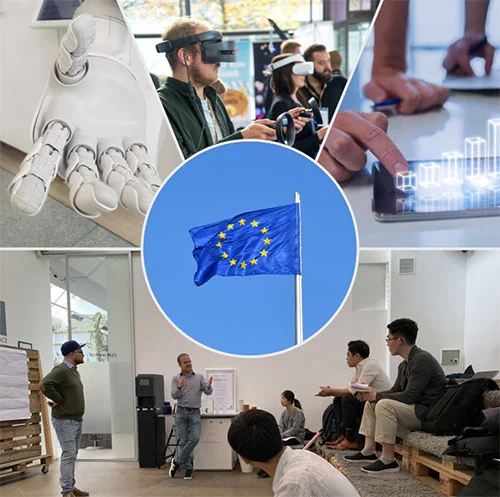
KIC Europe (Korea Innovation Center Europe) supports Korean startups’ entry into Europe through various means. Photo=kiceurope.eu
enpact is an organization under the City of Berlin, founded in 2013 with the goal of promoting entrepreneurship in emerging and developing countries. It mainly supports young startups and startup ecosystems themselves in the Middle East, Africa, Asia, and Latin America. Its main roles are programs that directly support startup founders, monitoring of startup ecosystems based on startup data and research from cities around the world, and support for startup accelerating institutions. To keep its network active, it also operates coworking spaces for startups in each city. It is currently running accelerating programs with startups in Egypt, Indonesia, Ghana, Kenya, and Mexico. Beyond that, it has built a network collaborating with more than 2,500 startups, over 600 mentors and experts, and more than 150 accelerating programs across over 30 countries worldwide. The jobs created thanks to enpact alone exceed 10,000.
Through this MOU, KIC Europe and enpact will pursue a joint KIC Europe-enpact program to support domestic startups’ entry into Europe in 2022. Through this, they will gain the opportunity to share the Berlin startup ecosystem and to receive support and networking for entering the European market. They will also introduce companies participating in the KIC Europe and enpact programs to both countries and strengthen the network between them.
At the event, there was a palpable mood of joy over the connection with enpact, the City of Berlin’s agency, along with anticipation that this could expand into a global network reaching Africa, the Middle East, and Latin America. This was followed by a networking event in which the participating Berlin startup officials and Korean startups exchanged greetings and introduced their businesses.
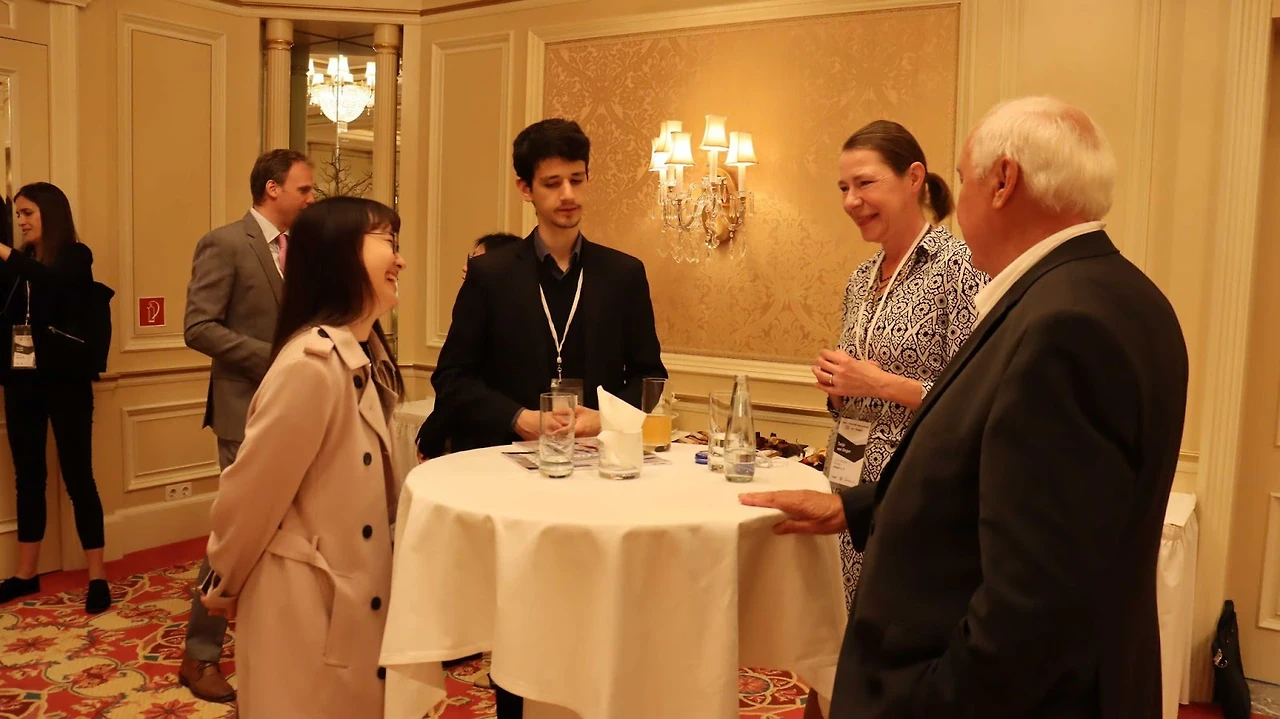
Korean startup Nota AI networking at the MOU signing ceremony between KIC Europe and enpact. Photo=provided by kiceurope
After the MOU signing ceremony, KIC Europe held an innovation academy for startups currently operating in Europe, covering topics such as ways to respond to carbon regulations and how to participate in EU public programs. With the EU’s announcement of an emissions trading scheme and a carbon border tax, companies are now in a situation where they need practical measures to respond to the related regulations. Accordingly, the session offered an introduction to EU carbon policy and discussed solutions so that startups could also prepare their own responses.
Finally came the session that made the startups’ eyes shine the brightest: “The Current State of Public Fund Programs in the EU and How to Apply." In the EU, there are various public funds that any company or research institute with a corporate entity in the EU can apply for, regardless of nationality. In particular, Horizon Europe, which provides long-term support in seven-year cycles, is a large-scale program with a total of 95.5 billion euros invested. This time, the European Innovation Council was established, and 70% of the budget for supporting breakthrough innovation to create new markets and for scale-up support goes to small and medium-sized enterprises — so it is fair to call it a support project for startups.
Jongwoon Hwang, head of KIC Europe, emphasized, “Unlike in Korea, the calls for proposals come out a year in advance, so there is plenty of time to prepare, and the procedures for settlement and reporting after applying are very simple, making it a worthwhile challenge for startups.” He shared his ambition, saying, “Going forward, KIC Europe will take the lead in continuously helping startups enter Europe in terms of space, finance, and operations.”
On-device AI startup Nota, photorealism-based VR/XR platform immersivecast, solar energy IT company haezoom, and data-based Asian food meal-kit startup easycook Asia were among the Korean startups that participated in and played an important role at this event. Let’s keep a continuous eye on the synergy Berlin and Korea will generate, and on the growth of these startups.
Eunseo Yi
eunseo.yi@123factory.de
This article is an edited and adapted version of [European Startup Chronicles] from <Bizhankook>.